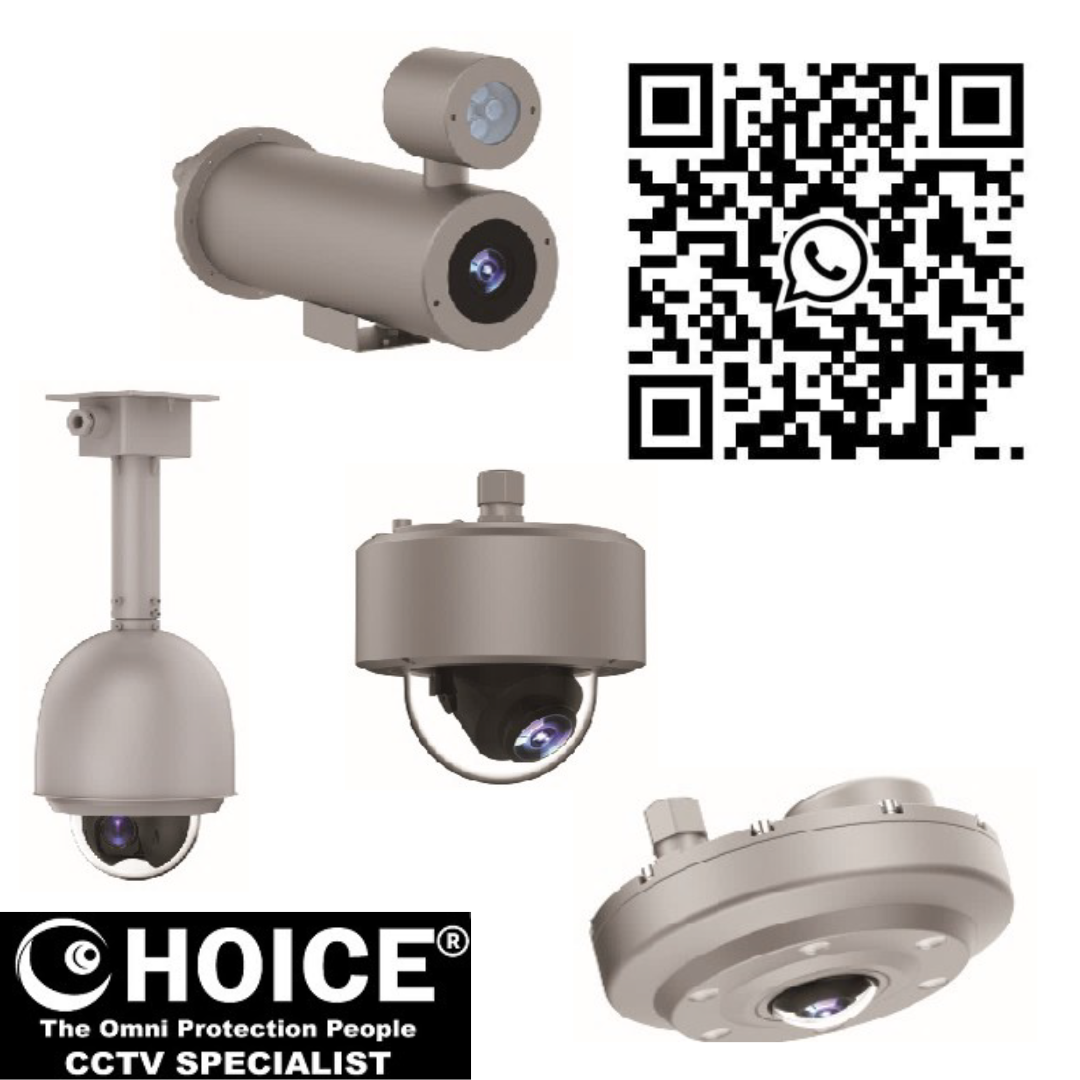
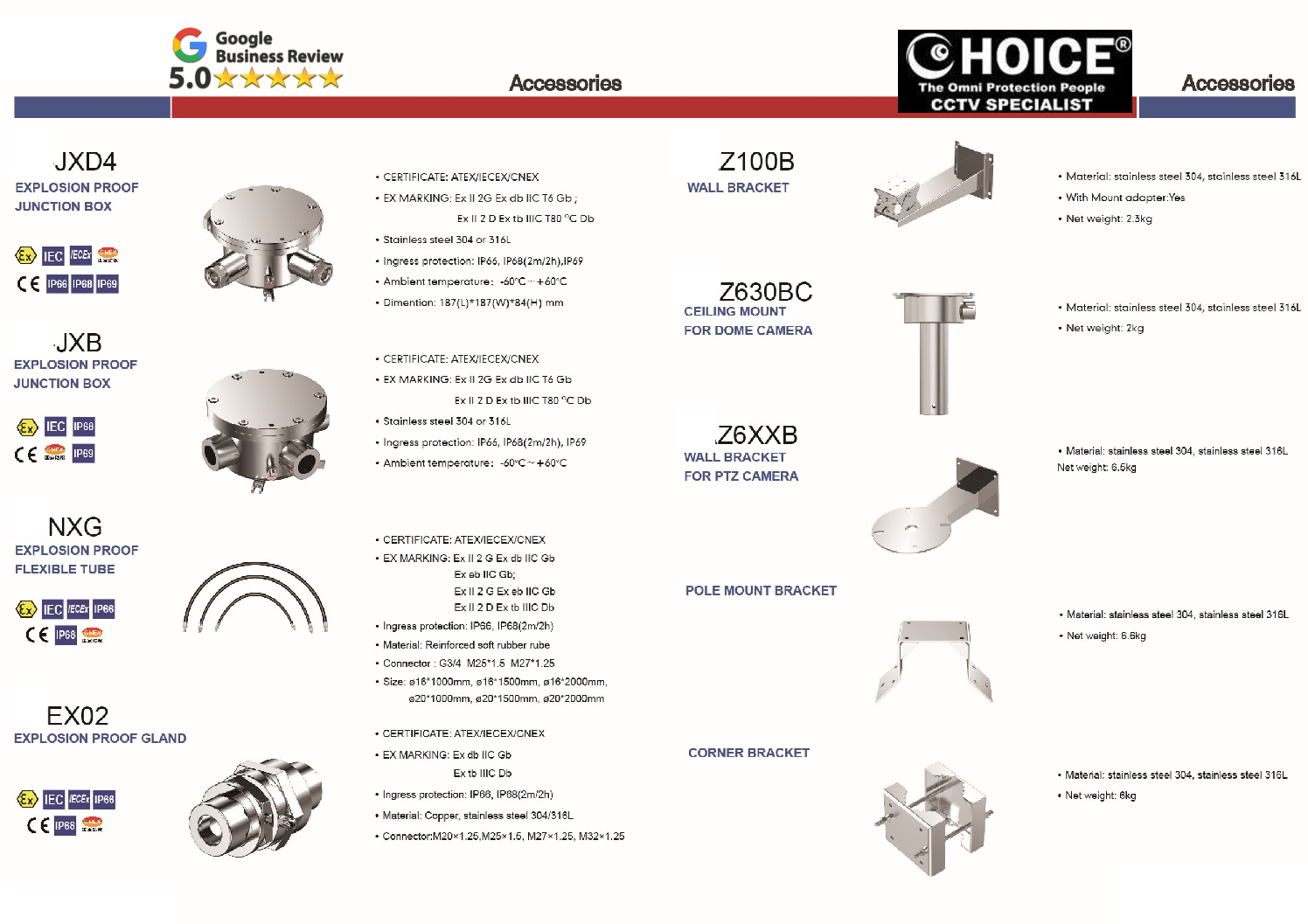
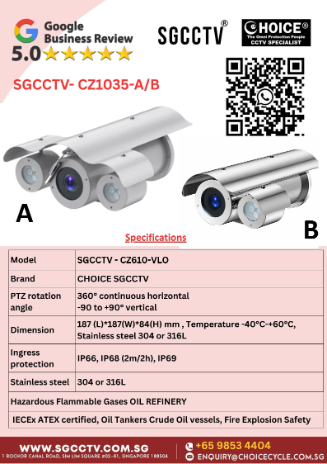
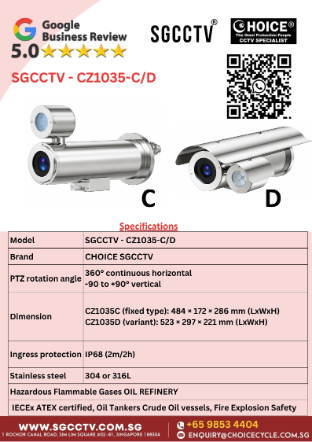
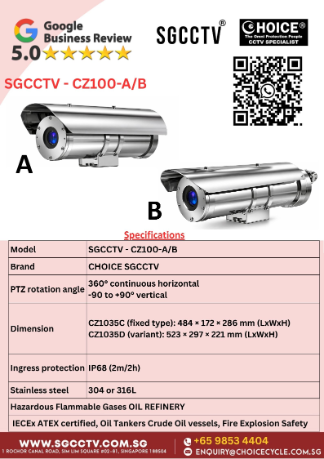
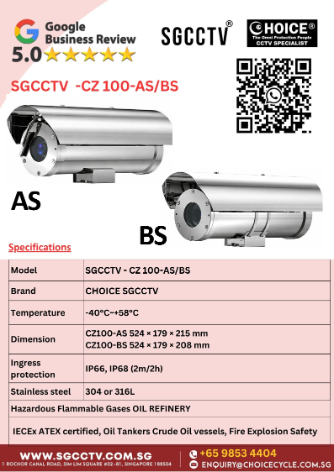
Anti-Corrosion S1032 S630 S6404 S6417 NEW IECEx ATEX certified Oil Tankers Crude Oil vessels Fire Explosion Safety Singapore
In coastal, marine, chemical, and heavy-industry environments, standard CCTV cameras fail prematurely due to corrosion, oxidation, and chemical exposure. Rusted housings, fogged lenses, degraded seals, and electrical shorting are common issues when surveillance systems are deployed in salt air, high humidity, acidic fumes, or industrial wash-down zones.
This is where anti-corrosion CCTV cameras become essential—not optional.
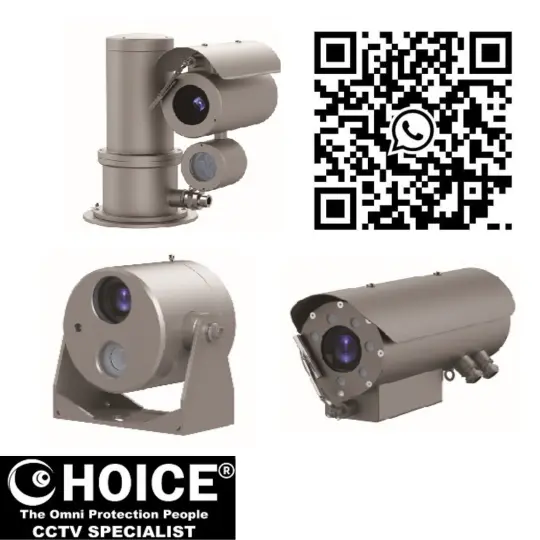
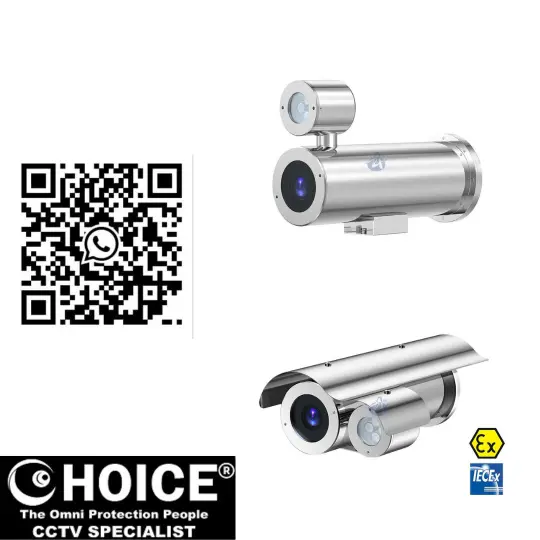
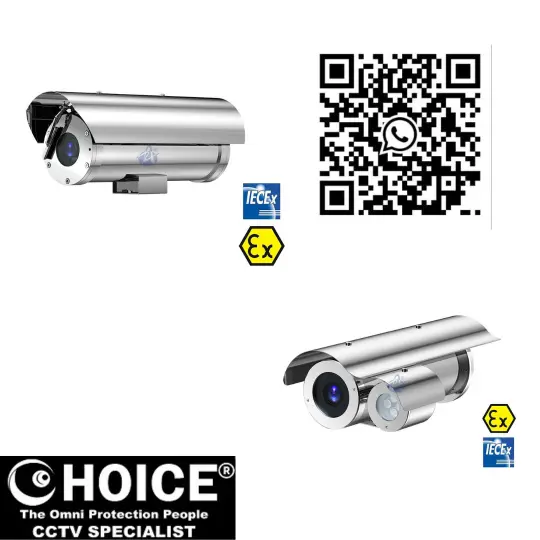
The S1032, S630, S6404, and S6417 models are purpose-built anti-corrosion camera solutions engineered for long-term reliability in aggressive environments. These models are widely deployed in ports, offshore platforms, marine vessels, petrochemical plants, wastewater facilities, power stations, and coastal infrastructure across Singapore and Southeast Asia.
This guide explains:
What makes anti-corrosion cameras different
Why S1032, S630, S6404, and S6417 are trusted together as a solution family
Where each model fits best
How anti-corrosion protection reduces total cost of ownership
Why these cameras outperform standard outdoor CCTV systems
What Is an Anti-Corrosion CCTV Camera?
An anti-corrosion CCTV camera is not simply a waterproof camera. It is designed to resist chemical and electrochemical degradation over many years of exposure.
Key differences from standard outdoor cameras include:
Marine-grade or corrosion-resistant metal housings
Special surface treatments and coatings
Sealed cable glands and corrosion-proof fasteners
Resistance to salt spray, acidic gas, alkali mist, and humidity
Long-term optical clarity without lens oxidation
The S1032, S630, S6404, and S6417 cameras are engineered specifically for these requirements.
Anti-Corrosion S1032 S630 S6404 S6417 NEW IECEx ATEX certified Oil Tankers Crude Oil vessels Fire Explosion Safety Singapore
Why Standard Outdoor Cameras Fail in Corrosive Environments
Many outdoor CCTV cameras are rated IP66 or IP67, yet still fail within 6–18 months in corrosive locations.
Common failure points include:
Rust formation around screws and joints
Oxidation of aluminium housings
Corrosion on PCB traces
Moisture ingress through degraded seals
Cloudy lenses caused by chemical vapour
Anti-corrosion cameras solve these issues at the material and design level, not just with rubber gaskets.
Overview of Anti-Corrosion Camera Models: S1032, S630, S6404 & S6417
These four models form a complete anti-corrosion CCTV lineup, suitable for different mounting styles, coverage needs, and industrial layouts.
| Model | Primary Role | Typical Use |
|---|---|---|
| S1032 | Compact fixed anti-corrosion camera | General perimeter & equipment monitoring |
| S630 | Anti-corrosion bullet camera | Long-range outdoor surveillance |
| S6404 | Dome-style anti-corrosion camera | Industrial indoor/outdoor coverage |
| S6417 | Heavy-duty anti-corrosion camera | Extreme marine & chemical environments |
Together, they allow system designers to standardise anti-corrosion protection across entire sites.
S1032 Camera – Compact & Industrial-Grade
The S1032 is designed for continuous operation in corrosive environments while maintaining a compact form factor.
Key Characteristics of S1032
Corrosion-resistant metal housing
Fully sealed construction for humidity and vapour resistance
Suitable for wall, ceiling, and bracket mounting
Stable imaging performance in high-moisture areas
Ideal Applications
Pump rooms
Utility corridors
Marine vessel interiors
Power distribution rooms
Wastewater control areas
The S1032 is often selected where space is limited but environmental stress is high.
Anti-Corrosion S1032 S630 S6404 S6417 NEW IECEx ATEX certified Oil Tankers Crude Oil vessels Fire Explosion Safety Singapore
S630 Bullet Camera – Long-Range Outdoor Protection
The S630 is a bullet-style anti-corrosion CCTV camera, ideal for long-range outdoor monitoring in exposed environments.
Key Characteristics of S630
Elongated bullet housing for better heat dissipation
Anti-corrosion coated exterior
Designed for coastal wind, rain, and salt spray
Stable operation under direct sunlight and humidity
Ideal Applications
Port perimeters
Coastal fences
Jetty and dock monitoring
Oil & gas facility boundaries
Industrial yard surveillance
The S630 excels in open-air environments where corrosion and weather exposure occur simultaneously.
S6404 Dome Camera – Discreet Industrial Coverage
The S6404 combines anti-corrosion protection with dome-style aesthetics, making it suitable for visible industrial spaces where appearance and durability both matter.
Key Characteristics of S6404
Dome enclosure with corrosion-resistant materials
Resistant to chemical vapour and wash-down
Reduced glare and reflection compared to bullet cameras
Tamper-resistant design
Ideal Applications
Chemical processing halls
Manufacturing plants
Water treatment facilities
Semi-indoor coastal structures
The S6404 is often used where operators, staff, or visitors are present, requiring a cleaner camera profile.
S6417 Anti-Corrosion Camera – Heavy-Duty & Extreme Environment Ready
The S6417 is the most robust anti-corrosion camera in this group, designed for extreme industrial and marine conditions.
Key Characteristics of S6417
Heavy-duty corrosion-resistant housing
Designed for prolonged exposure to salt mist and chemicals
Suitable for offshore and high-risk industrial zones
Long service life with minimal maintenance
Ideal Applications
Offshore platforms
Ship decks
Chemical storage areas
Refineries
Coastal power stations
The S6417 is selected when downtime is unacceptable and replacement access is difficult.
Why Anti-Corrosion Cameras Reduce Total Cost of Ownership
Although anti-corrosion cameras cost more upfront than standard outdoor cameras, they dramatically reduce long-term costs.
Cost Savings Over Time
Fewer camera replacements
Reduced maintenance visits
Lower system downtime
Stable image quality for years
Reduced safety risk from equipment failure
In marine and industrial environments, replacing failed cameras often costs more than the camera itself due to access equipment, permits, and downtime.
Anti-Corrosion S1032 S630 S6404 S6417 NEW IECEx ATEX certified Oil Tankers Crude Oil vessels Fire Explosion Safety Singapore
Industries That Require Anti-Corrosion CCTV Cameras
S1032, S630, S6404, and S6417 are commonly deployed in:
Marine & offshore industry
Ports & logistics terminals
Oil & gas facilities
Chemical manufacturing
Water treatment plants
Power generation stations
Coastal infrastructure projects
These environments experience constant corrosion pressure, making standard CCTV unsuitable.
Anti-Corrosion vs Stainless Steel Housing – What’s the Difference?
Many buyers assume stainless steel alone is enough. In reality, anti-corrosion design goes beyond material choice.
Anti-corrosion cameras include:
Surface treatments
Coating technology
Seal engineering
Corrosion-proof fasteners
Internal protection of electronics
S1032, S630, S6404, and S6417 integrate system-level corrosion resistance, not just metal housings.
Installation Best Practices for Anti-Corrosion CCTV
To maximise lifespan:
Use corrosion-resistant mounting brackets
Avoid mixed metals that cause galvanic corrosion
Seal cable entries properly
Use outdoor-rated PoE or power cables
Schedule periodic visual inspections
Correct installation ensures full lifespan performance.
Why Choose These Models Together as One System
Using S1032, S630, S6404, and S6417 together allows:
Consistent corrosion protection across all zones
Unified maintenance planning
Standardised spare parts strategy
Long-term system reliability
This approach is widely adopted in large-scale industrial CCTV projects.
Anti-Corrosion S1032 S630 S6404 S6417 NEW IECEx ATEX certified Oil Tankers Crude Oil vessels Fire Explosion Safety Singapore
Conclusion: Long-Term Surveillance Starts with Anti-Corrosion Design
For marine, coastal, and industrial environments, anti-corrosion CCTV cameras are not an upgrade—they are a requirement.
The S1032, S630, S6404, and S6417 provide a complete anti-corrosion surveillance solution, offering durability, reliability, and reduced lifetime cost in the harshest conditions.
Choosing the right anti-corrosion camera today prevents years of operational problems tomorrow.
Understanding Corrosion Mechanisms in CCTV Deployments
To fully appreciate why S1032, S630, S6404, and S6417 are necessary, it is important to understand how corrosion actually damages CCTV systems.
Corrosion is not a single process. In harsh environments, multiple mechanisms act simultaneously:
Salt Spray Corrosion
Common in coastal Singapore, ports, and offshore facilities. Salt particles accelerate electrochemical reactions, rapidly attacking:
Aluminium housings
Steel screws
Exposed connectors
Anti-corrosion cameras use treated surfaces and protected joints to block this process.
Chemical Vapour Corrosion
In chemical plants, wastewater facilities, and industrial zones, airborne chemicals silently degrade:
Lens coatings
Internal PCBs
Rubber seals
S1032, S630, S6404, and S6417 are designed to withstand continuous chemical exposure, not short-term splashes.
Galvanic Corrosion
Occurs when different metals touch in humid environments. Poor-quality cameras fail quickly due to:
Mixed fasteners
Incompatible brackets
Unprotected cable glands
These anti-corrosion models are designed to minimise galvanic reactions across the entire camera assembly.
Environmental Zones Where Anti-Corrosion Cameras Are Mandatory
Anti-corrosion cameras are not limited to outdoor use. Many indoor industrial areas are more corrosive than open air.
Zone 1: Coastal Outdoor Areas
Ports and harbours
Coastal fencing
Jetty walkways
Recommended models: S630, S6417
Zone 2: Semi-Enclosed Marine Structures
Ship decks
Covered loading bays
Offshore platform interiors
Recommended models: S1032, S6404, S6417
Zone 3: Industrial Indoor Corrosive Zones
Chemical processing halls
Pump rooms
Wastewater treatment plants
Recommended models: S1032, S6404
Using standard indoor cameras in these zones often leads to complete failure within one year.
Why Anti-Corrosion Cameras Are Critical in Singapore’s Climate
Singapore’s climate is uniquely challenging for CCTV systems:
Year-round high humidity
Frequent rainfall
Salt air near coastal zones
Industrial density
These conditions create a constant corrosion cycle with no seasonal relief.
S1032, S630, S6404, and S6417 are engineered for continuous exposure, not intermittent stress.
Anti-Corrosion Coatings vs Paint – Why Paint Is Not Enough
Some low-cost cameras rely only on external paint. This is ineffective long-term.
Problems with Painted Cameras
Paint cracks under heat
Micro-gaps allow moisture ingress
Corrosion begins underneath the coating
Failure occurs invisibly
True anti-corrosion cameras use:
Surface treatments
Material-level resistance
Sealed mechanical interfaces
This is why industrial buyers avoid painted housings in critical applications.
Anti-Corrosion S1032 S630 S6404 S6417 NEW IECEx ATEX certified Oil Tankers Crude Oil vessels Fire Explosion Safety Singapore
Lens Protection in Anti-Corrosion CCTV Cameras
One overlooked failure point is the lens assembly.
In corrosive environments:
Chemical vapour etches glass
Salt crystals cause permanent haze
Internal reflections increase
The lenses in S1032, S630, S6404, and S6417 are designed to:
Maintain optical clarity
Resist fogging
Prevent chemical etching
This ensures usable footage years after installation, not just at commissioning.
Power and Signal Stability in Corrosive Conditions
Corrosion affects not only housings, but also:
Power terminals
Ethernet ports
Ground connections
Anti-corrosion CCTV cameras use:
Protected connectors
Sealed cable entry points
Stable electrical pathways
This reduces:
Random camera dropouts
Intermittent video loss
Costly troubleshooting
Maintenance Strategy for Anti-Corrosion CCTV Systems
While cameras require far less maintenance, best practices include:
Annual visual inspection
Cleaning external surfaces
Checking mounting integrity
Verifying cable seals
Compared to standard cameras, maintenance frequency is reduced by 50–70%.
Compliance and Safety Considerations
Many industrial facilities are governed by:
Workplace safety regulations
Environmental protection standards
Operational risk assessments
Using CCTV cameras helps:
Maintain compliance
Reduce safety incidents
Ensure continuous monitoring
In some projects, anti-corrosion cameras are mandatory specifications, not optional upgrades.
Long-Term Performance Comparison (10-Year Outlook)
| Camera Type | Average Lifespan | Maintenance Cost | Failure Risk |
|---|---|---|---|
| Standard Outdoor Camera | 1–2 years | High | Very High |
| Painted “Anti-Rust” Camera | 2–3 years | Medium | High |
| True Anti-Corrosion Camera (S1032 / S630 / S6404 / S6417) | 7–10 years | Low | Minimal |
This makes anti-corrosion cameras the most economical choice over time, despite higher upfront cost.
Anti-Corrosion S1032 S630 S6404 S6417 NEW IECEx ATEX certified Oil Tankers Crude Oil vessels Fire Explosion Safety Singapore
Why System Integrators Prefer These Models
Professional system integrators choose S1032, S630, S6404, and S6417 because they:
Reduce call-backs
Improve project reliability
Protect brand reputation
Meet industrial tender requirements
In industrial CCTV, failure reflects on the installer, not just the product.
CCTV as a Risk Management Tool
CCTV failure in industrial environments can lead to:
Safety incidents
Environmental damage
Compliance violations
Operational downtime
Anti-corrosion cameras function as risk mitigation infrastructure, not just security devices.
Final Thoughts: Anti-Corrosion Is a Design Philosophy, Not a Feature
S1032, S630, S6404, and S6417 are not simply cameras with better housings. They represent a design philosophy focused on longevity, stability, and reliability in environments where standard electronics cannot survive.
For marine, coastal, and industrial surveillance, anti-corrosion CCTV cameras are the only rational choice.
Engineering Design Principles Behind True Anti-Corrosion Cameras
CCTV cameras such as S1032, S630, S6404, and S6417 are engineered from the outside in, not adapted from consumer designs.
This distinction is critical.
Standard cameras are typically designed first for imaging performance, with environmental protection added later. Anti-corrosion cameras reverse this approach by prioritising environmental survivability, then optimising imaging within those constraints.
Material Selection Strategy
Each component is selected based on:
Resistance to oxidation
Resistance to chemical reaction
Mechanical stability under heat and humidity
This applies not only to the external housing, but also to:
Internal frames
Fasteners
Lens holders
Heat sinks
This system-level approach is why these cameras maintain structural integrity long after standard cameras degrade.
Why “IP Rating Alone” Is Not a Corrosion Solution
Many procurement teams mistakenly rely on IP66 or IP67 ratings when specifying cameras for harsh environments.
IP ratings only measure:
Dust ingress
Water ingress
They do not measure corrosion resistance.
A camera can be IP67 and still:
Rust internally
Oxidise PCB traces
Fail electrically within months
S1032, S630, S6404, and S6417 are designed specifically for chemical and electrochemical resistance, which IP ratings do not address.
Long-Term Image Consistency in Corrosive Environments
One hidden cost of corrosion is image degradation over time, not complete failure.
Common issues with non-anti-corrosion cameras:
Gradual lens clouding
Reduced contrast
Increased glare
Loss of detail
These issues often go unnoticed until footage is reviewed for an incident—when it is already too late.
Anti-corrosion cameras preserve image clarity year after year, ensuring footage remains usable for:
Safety investigations
Insurance claims
Compliance audits
Cable Interface Protection: The Most Overlooked Failure Point
In corrosive environments, the cable entry point is the weakest link.
Problems commonly seen with standard cameras:
Corrosion creeping through cable glands
Moisture tracking along Ethernet jackets
Oxidation at RJ45 terminations
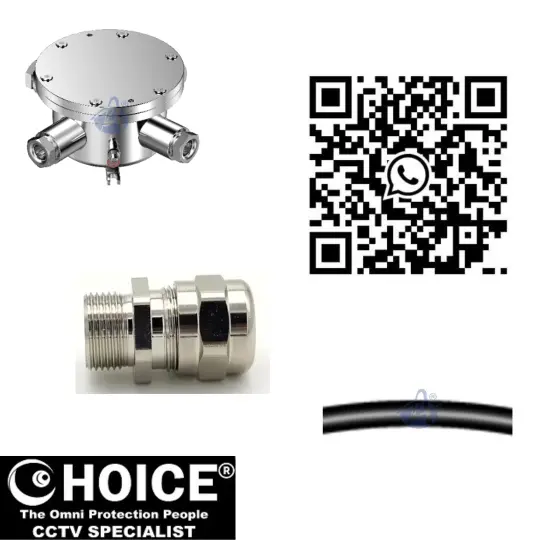
S1032, S630, S6404, and S6417 incorporate:
Sealed cable entry systems
Corrosion-resistant interface components
Stable grounding design
This significantly reduces intermittent faults that are difficult and expensive to troubleshoot.
CCTV in Safety-Critical Operations
In industrial and marine facilities, CCTV often supports:
Process monitoring
Safety compliance
Incident response
Asset protection
Camera failure in these environments can lead to:
Safety blind spots
Regulatory violations
Increased operational risk
CCTV cameras act as safety infrastructure, not just security equipment.
Procurement Justification for Anti-Corrosion Cameras
From a procurement perspective, these cameras provide value in multiple areas:
Reduced Replacement Frequency
Anti-corrosion cameras typically outlast standard cameras by 3–5 times in harsh environments.
Lower Labour Costs
Fewer replacements mean:
Less access equipment
Fewer shutdowns
Reduced contractor visits
Predictable Lifecycle Planning
Facilities managers can plan upgrades instead of reacting to failures.
This makes S1032, S630, S6404, and S6417 ideal for long-term asset planning.
CCTV in Tender Specifications
In professional tenders, anti-corrosion cameras are often specified using language such as:
“Suitable for corrosive and marine environments”
“Designed for long-term exposure to salt spray and chemical vapour”
“Industrial-grade corrosion-resistant construction”
These models meet such requirements without ambiguity, reducing:
Tender clarification rounds
Specification disputes
Post-installation issues
Integration with Existing CCTV Systems
Despite their industrial design, these cameras integrate seamlessly with:
Existing NVR systems
PoE network infrastructure
Central monitoring platforms
This allows organisations to:
Upgrade selectively
Replace failed cameras without redesign
Improve reliability incrementally
Risk of Under-Specifying Cameras in Corrosive Environments
One of the most expensive mistakes in CCTV design is under-specification.
Short-term savings often result in:
Frequent failures
Poor footage quality
Loss of stakeholder confidence
Anti-corrosion cameras eliminate this risk by designing for the worst conditions, not average ones.
Lifecycle Comparison: Reactive vs Preventive Strategy
Reactive Strategy (Standard Cameras)
Replace when failed
Frequent site visits
Inconsistent footage
Higher long-term cost
Preventive Strategy (Anti-Corrosion Cameras)
Install once, plan maintenance
Stable performance
Predictable costs
Reduced operational disruption
S1032, S630, S6404, and S6417 support the preventive strategy, which is preferred in professional environments.
Environmental Sustainability Considerations
Fewer replacements also mean:
Less electronic waste
Reduced packaging waste
Lower carbon footprint from logistics
Anti-corrosion cameras support sustainable infrastructure practices, increasingly important in modern projects.
Why Industrial Consultants Recommend Anti-Corrosion Models
Consultants and engineers favour these models because they:
Reduce project risk
Simplify maintenance assumptions
Align with international best practices
This is why anti-corrosion CCTV cameras are commonly specified in:
Marine infrastructure projects
Industrial expansion plans
Government and utility tenders
Final Expansion Summary
Anti-corrosion CCTV cameras are not a luxury upgrade—they are a foundational requirement for reliable surveillance in harsh environments.
The S1032, S630, S6404, and S6417 models provide:
Structural durability
Electrical stability
Optical consistency
Long-term cost efficiency
Together, they form a complete, scalable, and professional anti-corrosion CCTV solution.

📍 Buy Anti-Corrosion CCTV Cameras in Singapore – Choicecycle (SGCCTV)
For professional anti-corrosion CCTV solutions, system design, and supply in Singapore:
Choicecycle (SGCCTV Singapore)
📍 Store: Sim Lim Square #02-81, Singapore
⏰ Operating Hours: 11:00 AM – 8:00 PM
📞 WhatsApp: +65 9853 4404
📧 Email: enquiry@choicecycle.com.sg
🌐 Website: https://sgcctv.com.sg
Anti-Corrosion S1032 S630 S6404 S6417 NEW IECEx ATEX certified Oil Tankers Crude Oil vessels Fire Explosion Safety Singapore


Nunc lacus elit, faucibus ac laoreet sed, dapibus ac mi. Maecenas eu ante a elit tempus fermentum. Aliquam commodo tincidunt semper. Phasellus accumsan, justo ac mollis pharetra, ex dui pharetra nisl, a scelerisque ipsum nulla ac sem. Cras eu risus urna. Duis lorem sapien, congue eget nisl sit amet, rutrum faucibus elit.
Donec accumsan auctor iaculis. Sed suscipit arcu ligula, at egestas magna molestie a. Proin ac ex maximus, ultrices justo eget, sodales orci. Aliquam egestas libero ac turpis pharetra, in vehicula lacus scelerisque. Vestibulum ut sem laoreet, feugiat tellus at, hendrerit arcu.
Nunc lacus elit, faucibus ac laoreet sed, dapibus ac mi. Maecenas eu ante a elit tempus fermentum. Aliquam commodo tincidunt semper. Phasellus accumsan, justo ac mollis pharetra, ex dui pharetra nisl, a scelerisque ipsum nulla ac sem. Cras eu risus urna. Duis lorem sapien, congue eget nisl sit amet, rutrum faucibus elit.