Body Worn Camera WIFI 4G Live Stream Light Weight Night Vision Video Stabilizer Wide Angle AES256 Encryption Singapore Security System SGCCTV CCTV Camera Repair
Can I wear a body-worn camera?
Body-worn cameras can be used by civilians in public settings.
Public places generally do not carry an expectation of privacy, and recording for personal documentation or safety purposes is commonly practiced.
The PDPA primarily regulates organisations and typically does not apply to individuals acting in a personal capacity.
Consent is not usually required when both parties are in a public space, and transparency through LED indicators or labels helps avoid misunderstandings.
Users should still comply with location-specific policies, avoid recording in restricted areas, and ensure respectful conduct.
10 Advantages of Body-Worn Cameras (Police & Enforcement Context)
Protect Against False Accusations and Complaints
Video documentation provides an objective record that protects officers, teachers, frontline staff, and agencies from unfair allegations made by members of the public, parents, or other stakeholders.Deter Aggressive or Escalating Behaviour
When individuals are aware that interactions are being recorded, they are less likely to engage in hostile or confrontational conduct.Enable Real-Time Support via Wi-Fi / 4G / Command Center
Live streaming allows supervisors or rescue units to remotely view the situation, assess risks, and deploy assistance without delay.Provide Evidence for Investigation and Court Proceedings
Video footage becomes reliable digital evidence for criminal, civil, or disciplinary cases, improving the accuracy of investigations and legal outcomes.Reduce Dependency on Witnesses
Video acts as a digital witness, reducing the need to rely on multiple human testimonies which can be biased, inconsistent, or incomplete.Improve Officer Accountability and Professional Conduct
The presence of recording technology encourages procedural compliance and consistent behaviour among enforcement personnel.Enhance Training and After-Action Review
Footage can be used for training new officers, reviewing real cases, improving decision-making, and strengthening operational policies.Boost Public Confidence and Trust
Transparent recording practices increase public trust in enforcement agencies, as actions are documented and traceable.Support Vulnerable Groups
Useful for cases involving youths, elderly, persons with disabilities, or emotionally distressed individuals, ensuring their interactions are accurately captured for follow-up services.Improve Reporting Accuracy and Documentation
Recorded footage assists in generating detailed and accurate incident reports, reducing paperwork time and improving report consistency.
Video Sample A || Video Sample B || Video Sample C || Step by Step Setup Guide #1
Merlion Park Marina Bay Sand Garden Full HD Night Vision Video
Body Worn Camera WIFI 4G Live Stream Light Weight Night Vision Video Stabilizer Wide Angle AES256 Encryption Singapore Security System SGCCTV CCTV Camera Repair

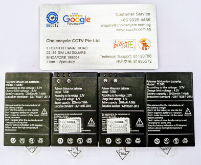
Body Worn Camera BATTERY REPLACE BWCTL580 Body Camera Battery Police Body Worn Cameras Battery Repair Replace Singapore
$38.00CHOICE Brand and SGCCTV Brand are Singapore IPOS Trade Mark Registered. Widely deployed in Shopping Malls, Residential, Commercial, Office, Warehouse. Compatible with ALL DVR & NVR ONVIF protocols. Great Technical…

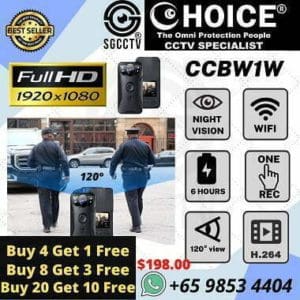
Body Worn Camera CCBW1W 95g Lite Weight Police Body Worn WIFI Live Stream Security Enforcement Public Harassment Video Evidence Mobile Camera School Security
$198.00CHOICE Brand and SGCCTV Brand are Singapore IPOS Trade Mark Registered. Widely deployed in Shopping Malls, Residential, Commercial, Office, Warehouse. Solid Cover Protection against dropped, Weatherproof. Great Technical Support at…
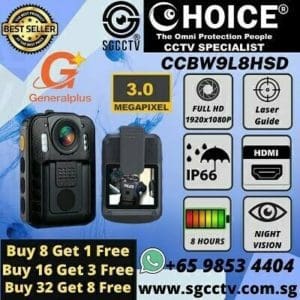
Body Worn Camera CCBW9LSD Police Body Worn Cameras Security Officer Patrol Camera Public Harassment Video Evidence Mobile Camera
$198.00CHOICE Brand and SGCCTV Brand are Singapore IPOS Trade Mark Registered. Widely deployed in Shopping Malls, Residential, Commercial, Office, Warehouse. Solid Cover Protection against dropped, Weatherproof. Great Technical Support at…
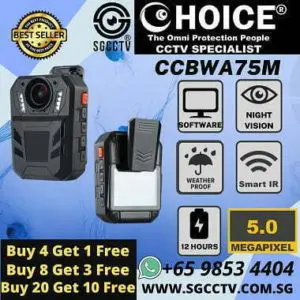
Body Worn Camera CCBWA75M Police Body Worn 5MP 2560x1920P Wide Angle 170 degree 12 hours IP67 PC Software inclusive Sim Lim Square CCTV Store 02-81 98534404
$348.00CHOICE Brand and SGCCTV Brand are Singapore IPOS Trade Mark Registered. Widely deployed in Shopping Malls, Residential, Commercial, Office, Warehouse. Solid Cover Protection against dropped, Weatherproof. Great Technical Support at…
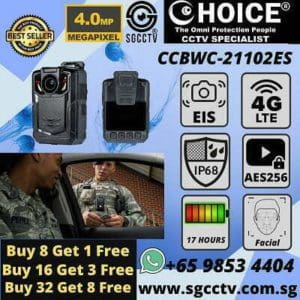
Body Worn Camera CCBWC-21102ES Whole Sale Police Army 4MP 4G WIFI AES256 17 hours BWC
$398.00CHOICE Brand and SGCCTV Brand are Singapore IPOS Trade Mark Registered. Widely deployed in Shopping Malls, Residential, Commercial, Office, Warehouse. Solid Cover Protection against dropped, Weatherproof. Great Technical Support at…
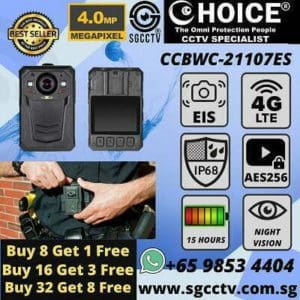
Body Worn Camera CCBWC-21107ES Whole Sale Police Camera 4MP 4G WIFI AES256 Police Body Worn Electronic Image Stabilization EIS
$398.00CHOICE Brand and SGCCTV Brand are Singapore IPOS Trade Mark Registered. Widely deployed in Shopping Malls, Residential, Commercial, Office, Warehouse. Solid Cover Protection against dropped, Weatherproof. Great Technical Support at…

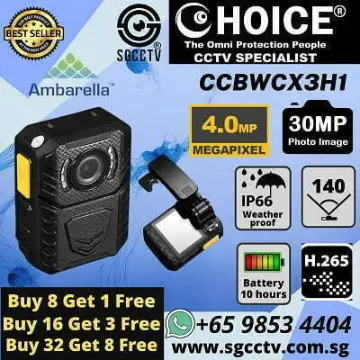
Body Worn Camera CCBWCX3H1 Police Body Worn Affordable Durable Body Cameras 4MP Video 30MP Photo H.265 IP66 Weatherproof Wide Angle Night Vision
$295.00CHOICE Brand and SGCCTV Brand are Singapore IPOS Trade Mark Registered. Widely deployed in Shopping Malls, Residential, Commercial, Office, Warehouse. Solid Cover Protection against dropped, Weatherproof. Great Technical Support at…

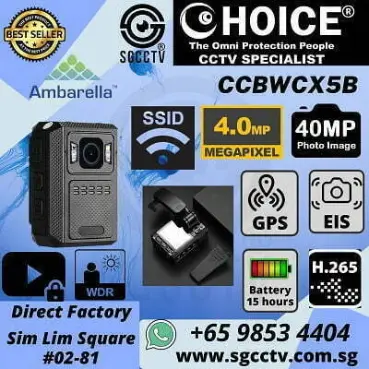
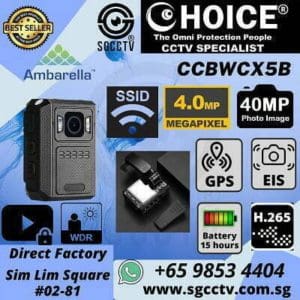
Body Worn Camera CCBWCX5B Police Body Worn 4MP Video 40MP Photo 13~15 hours WIFI SSID GPS Location Electronic Image Stabilization EIS 电子防抖
$398.00CHOICE Brand and SGCCTV Brand are Singapore IPOS Trade Mark Registered. Widely deployed in Shopping Malls, Residential, Commercial, Office, Warehouse. Solid Cover Protection against dropped, Weatherproof. Great Technical Support at…
Body Worn Camera CCBWCX6A Police Body Worn Camera 4MP Video 4G WIFI SSID GPS Electronic Image Stabilization EIS 电子防抖
$398.00CHOICE Brand and SGCCTV Brand are Singapore IPOS Trade Mark Registered. Widely deployed in Shopping Malls, Residential, Commercial, Office, Warehouse. Compatible with ALL DVR & NVR ONVIF protocols. Great Technical…
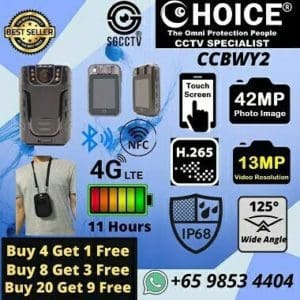
Body Worn Camera CCBWCY2 Live Streaming Body Camera Recording System Direct Factory Best Price 13MP Video Touch Screen Digital Evidence Management Solutions IP68 Waterproof H.265 42MP Photo 125 degree 4G LTE
$850.00CHOICE Brand and SGCCTV Brand are Singapore IPOS Trade Mark Registered. Widely deployed in Shopping Malls, Residential, Commercial, Office, Warehouse. Solid Cover Protection against dropped, Weatherproof. Great Technical Support at…
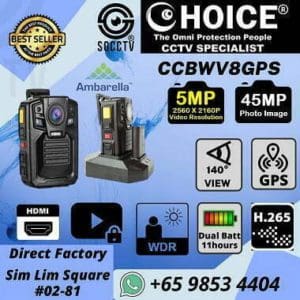
Body Worn Camera CCBWV8GPS 5MP H.265 2560X1440 45M WDR Video Protected Leakage Format Digital Evidence Management System DEMS Software Ambarella A7LA50 GPS
$420.00CHOICE Brand and SGCCTV Brand are Singapore IPOS Trade Mark Registered. Widely deployed in Shopping Malls, Residential, Commercial, Office, Warehouse. Solid Cover Protection against dropped, Weatherproof. Great Technical Support at…
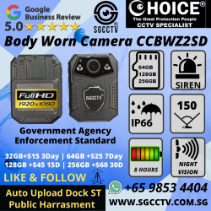
Body Worn Camera CCBWZ2SD Police Body Worn Cheapest Top 10 Best Body Cameras Comparison Rental For Sales Repair BWC Camera
Save34.9%Save $69.20Only$128.80 Original price was: $198.00.$128.80Current price is: $128.80.CHOICE Brand and SGCCTV Brand are Singapore IPOS Trade Mark Registered. Widely deployed in Shopping Malls, Residential, Commercial, Office, Warehouse. Solid Cover Protection against dropped, Weatherproof. Great Technical Support at…

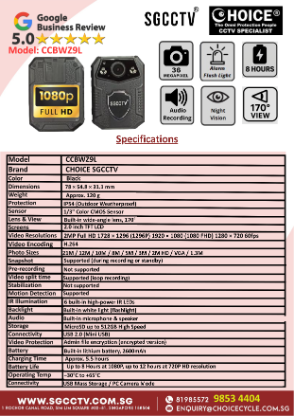
Body Worn Camera CCBWZ9L DOCK Charging Police Body Wearing Camera Cheapest Top 10 Best Body Cameras Rental Sales Repair Camera
$198.00CHOICE Brand and SGCCTV Brand are Singapore IPOS Trade Mark Registered. Widely deployed in Shopping Malls, Residential, Commercial, Office, Warehouse. Solid Cover Protection against dropped, Weatherproof. Great Technical Support at…

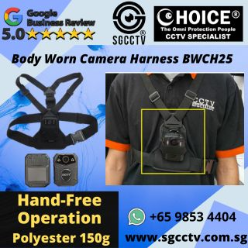
Body Worn Camera Harness BWCH25 Securely holds your camera at chest level for a stable shake-free recording experience Police Singapore
$48.00CHOICE Brand and SGCCTV Brand are Singapore IPOS Trade Mark Registered. Widely deployed in Shopping Malls, Residential, Commercial, Office, Warehouse. Compatible with ALL DVR & NVR ONVIF protocols. Great Technical…

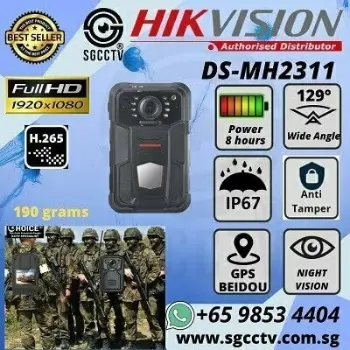
Body Worn Camera Hikvision DS-MH2311 Security Officer Police Force Army Officer Instructors Video Evidence Security System CCTV Camera
$850.00HIKVISION SINGAPORE OFFICIAL PLANTINUM PARTNER Supply and Maintenance HIKVISION CCTV IP Cameras, NVR, Turbo HD TVI Cameras, DVR, PTZ Cameras, Access Control System, Video Intercom, Sim Lim Square 02-81 10am-7pm…