Explosion-Proof Solutions: JXD4, JBX, NXG & EX02 for Hazardous Industrial Environments
Industrial sites such as oil refineries, chemical plants, offshore platforms, and grain-processing facilities present unique challenges when it comes to electrical safety. These areas often contain flammable gases, vapors, or combustible dust, creating hazardous atmospheres where even a small spark or heat source can trigger an explosion. Ensuring safe and reliable electrical installations in such environments requires explosion-proof components specifically engineered and certified for these conditions.
This article provides a comprehensive overview of four key explosion-proof products — JXD4 junction boxes, JBX series boxes, NXG conduits, and EX02 glands — explaining their features, applications, certifications, installation guidelines, and the benefits of using them together as an integrated system.
What Does “Explosion-Proof” Mean?
The term explosion-proof is often misunderstood. It does not mean that the device can withstand an external explosion. Instead, it indicates that the device is designed to contain any internal spark or arc so that it cannot ignite the surrounding hazardous atmosphere. Explosion-proof products must meet strict standards, including ATEX (Europe), IECEx (International), CNEx (China), and UL/FM (United States) depending on the region.
Key characteristics of explosion-proof equipment include:
Rugged enclosures made of stainless steel, cast aluminum, or other durable alloys
Flameproof construction to contain internal ignition
Tightly sealed joints and cable entries to prevent gas or dust penetration
Certification for specific hazardous zones (Zone 1, Zone 2 for gases; Zone 21, Zone 22 for dust)
Explosion-proof devices are critical in industries where even a minor ignition could result in catastrophic damage to equipment, infrastructure, or personnel.
JXD4 Explosion-Proof Junction Box
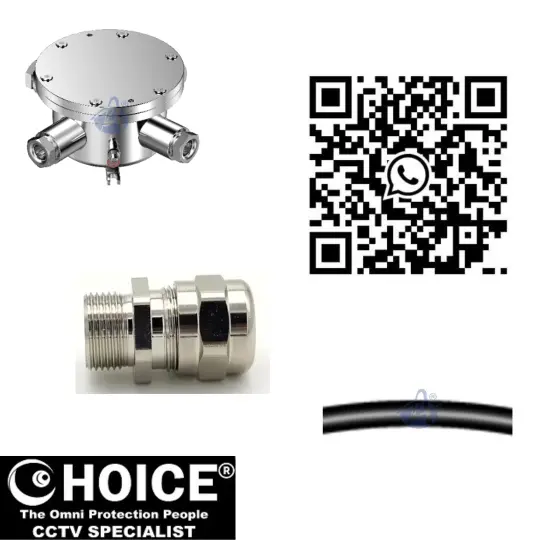
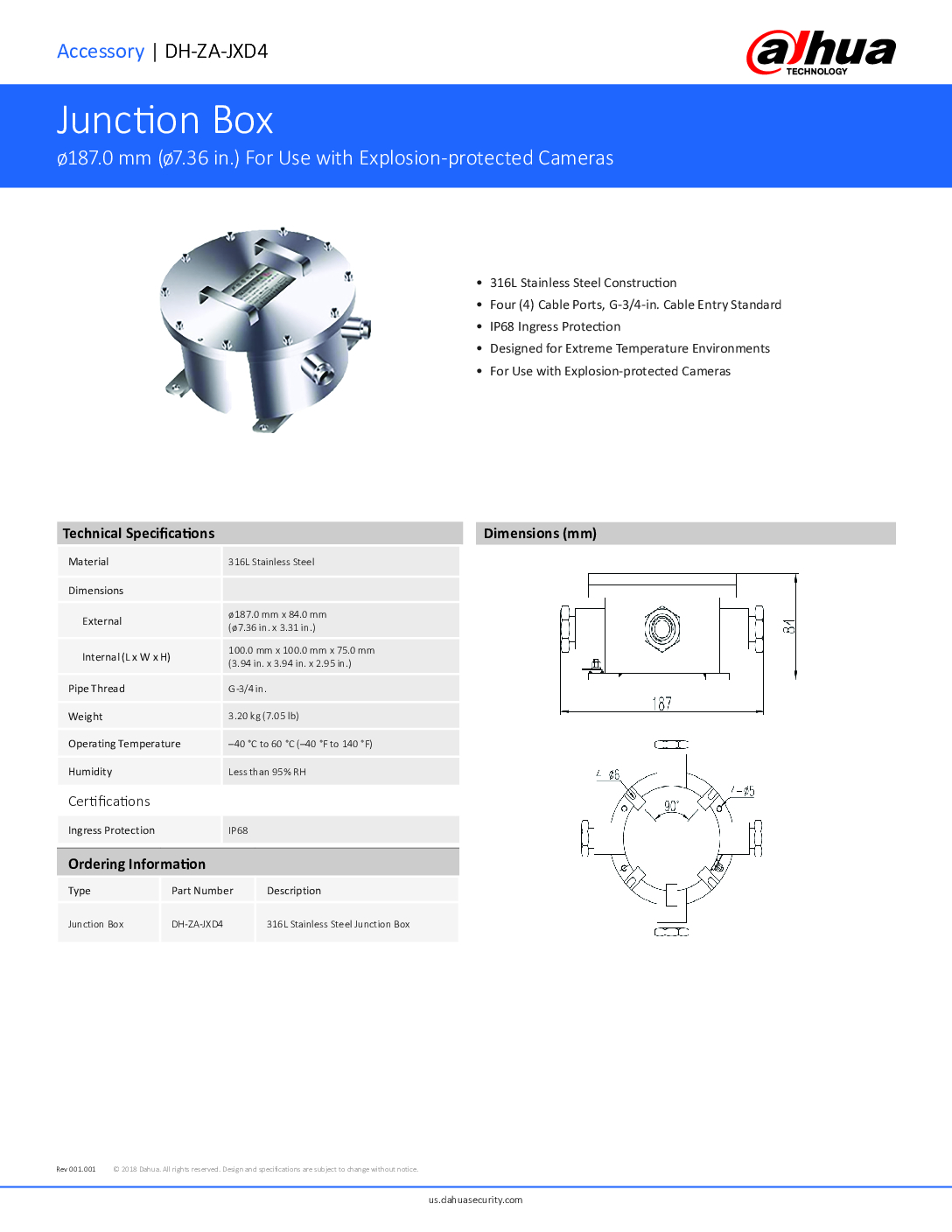
The JXD4 junction box is one of the most widely used explosion-proof enclosures for hazardous environments. Its primary function is to house electrical connections safely, ensuring that internal sparks or heat cannot escape and ignite the surrounding atmosphere.
Features
Construction: Stainless steel (304/316) for superior corrosion resistance
Ingress Protection: IP66/IP68, fully dust- and waterproof
Explosion Rating: Exd II C T6 Gb / DIP A21 T80°C
Temperature Range: –40°C to 60°C
Cable Ports: Multiple threaded entries, typically G 3/4″
Applications: Oil & gas, chemical processing, offshore installations, petrochemical plants
Benefits
High durability in harsh industrial environments
Flexible wiring options with multiple cable entries
Certified safety for both gas and dust hazardous zones
Easy integration with other explosion-proof components such as NXG conduits and EX02 glands
The JXD4 junction box is essential for ensuring electrical safety in environments where flammable substances are present. Its sturdy design and certification make it suitable for long-term industrial use.
JBX Explosion-Proof Box
The JBX series refers to a variety of explosion-proof boxes that provide similar functions to the JXD4 but offer additional size options and design flexibility.
Key Characteristics
Flameproof enclosures that prevent internal ignition from reaching the external environment
Multiple sizes to accommodate different wiring and installation requirements
High ingress protection (IP66/IP68)
Compatibility with other explosion-proof components such as NXG conduits and EX02 glands
Applications
Electrical distribution and control
Power supply enclosures in hazardous zones
Integration with lighting, sensors, or communication devices in industrial areas
The JBX series is ideal for industrial applications where modular installation or expansion is required. It complements the JXD4 junction boxes and ensures flexibility without compromising safety.
NXG Explosion-Proof Conduits
NXG conduits are designed to safely route electrical cables between junction boxes, equipment, and other devices in hazardous areas. These conduits are engineered to maintain explosion-proof integrity along the entire cable run.
Features
Material: Stainless steel or other corrosion-resistant alloys
Explosion Rating: Certified to ATEX, IECEx, and CNEx standards
Sealing Integrity: Prevents sparks, heat, or arcs from escaping at joints
Mechanical Protection: Guards cables from physical damage and environmental exposure
Applications
Connecting JXD4 junction boxes and JBX enclosures
Routing power and signal cables in chemical plants, refineries, and offshore facilities
Integration with EX02 glands at cable entry points
NXG conduits are essential for completing an explosion-proof system, ensuring that cables are protected along their entire path and that the installation complies with hazardous area regulations.
EX02 Explosion-Proof Glands
The EX02 gland is an explosion-proof device that seals and secures cables entering or exiting a junction box or equipment enclosure. Unlike standard cable glands, EX02 glands maintain the integrity of the explosion-proof enclosure, preventing sparks or heat from escaping through cable entry points.
Features
Explosion-Proof Rating: Certified for Zone 1/2 (gas) and Zone 21/22 (dust)
Cable Compatibility: Works with multiple cable diameters
Sealing: Provides flameproof, dustproof, and waterproof sealing
Strain Relief: Protects the cable from mechanical stress
Material: Stainless steel or high-strength alloys
Benefits
Maintains full explosion-proof integrity of the enclosure
Ensures safe routing of power and signal cables
Reduces risk of ignition at cable entry points
Compatible with both JXD4 and JBX series boxes
EX02 glands are the critical link between the conduit, junction box, and the external environment, completing a fully integrated explosion-proof system.
Integrated System: JXD4, JBX, NXG & EX02
When combined, these four components form a comprehensive explosion-proof system for hazardous industrial environments:
| Component | Function |
|---|---|
| JXD4 | Houses electrical connections safely |
| JBX | Provides additional enclosure options and modularity |
| NXG | Protects and routes cables along the system |
| EX02 | Seals cable entries and maintains explosion-proof integrity |
Applications Across Industries
Oil & Gas Facilities: Safe electrical distribution, control, and monitoring
Chemical Plants: Prevent ignition from vapors and dust
Offshore Platforms: Corrosion-resistant and durable components
Grain Processing Facilities: Safe operation in dust-prone environments
By using these components together, industrial sites can achieve full compliance with international explosion-proof standards, while also ensuring the safety of personnel and equipment.
Installation Guidelines
Proper installation is essential to maintain the explosion-proof integrity of the system. Key considerations include:
Cable Glands: Always use certified EX02 glands to seal cable entries
Conduit Installation: Use NXG conduits to route cables safely and maintain flameproof continuity
Box Mounting: Securely mount JXD4 and JBX boxes, ensuring no gaps or loose fittings
Environmental Protection: Avoid exposure to chemical corrosion or mechanical impact
Certification Compliance: Follow ATEX, IECEx, CNEx, or local standards for hazardous zones
Correct installation not only ensures safety but also extends the lifespan of explosion-proof components.
Explosion-Proof Standards & Certifications
Understanding certifications helps in selecting the right components for your environment:
ATEX (Europe): Certifies compliance with EU hazardous area directives
IECEx (International): Globally recognized certification scheme
CNEx (China): National certification for explosion-proof equipment
UL/FM (USA): National standards for hazardous locations
Each component — JXD4, JBX, NXG, and EX02 — should carry relevant certifications to ensure compliance with the specific zone classification in which it is installed.
Benefits of Using JXD4, JBX, NXG & EX02 Together
Enhanced Safety: Prevents ignition in hazardous zones
Regulatory Compliance: Meets international explosion-proof standards
Durability: Stainless steel and corrosion-resistant materials withstand harsh conditions
Flexible Installation: Modular design allows easy system expansion
Reliable Operation: Reduces downtime and risk of equipment failure
Using these components together creates a robust, reliable, and fully compliant explosion-proof system suitable for demanding industrial environments.
Recommended Keywords for SEO
To maximize search visibility, include the following:
Explosion-proof junction box
ATEX/IECEx certified explosion-proof equipment
Hazardous area electrical enclosure
Explosion-proof conduit and gland
IP66/IP68 industrial enclosures
Zone 1/Zone 2 explosion-proof systems
Stainless steel explosion-proof components
NXG conduit, EX02 gland, JXD4, JBX
These keywords can be naturally incorporated into headings, paragraphs, and metadata for better SEO performance.
Conclusion
In hazardous industrial environments, safety, reliability, and compliance are non-negotiable. The combination of JXD4 junction boxes, JBX series boxes, NXG conduits, and EX02 glands ensures that electrical installations are fully explosion-proof, protecting both personnel and equipment.
When installed correctly and used together, these components provide:
Complete protection against sparks, arcs, and heat
Compliance with international safety standards
Long-term durability for harsh industrial conditions
Flexible, scalable installation options
Investing in certified explosion-proof solutions like these is not just regulatory—it is a critical safeguard for operational safety, reliability, and peace of mind.
Technical Comparison: JXD4 vs JBX
While both the JXD4 and JBX series serve as explosion-proof enclosures, understanding their differences helps optimize system design:
| Feature | JXD4 | JBX |
|---|---|---|
| Material | Stainless Steel 304/316 | Stainless Steel / Cast Aluminum |
| Sizes Available | Standardized sizes for junction wiring | Multiple sizes for modular applications |
| Cable Entry | Fixed threaded ports | Flexible threaded or knock-out options |
| IP Rating | IP66/IP68 | IP66/IP68 (varies by model) |
| Application | Junction connections | Control, distribution, or sensor integration |
| Certification | ATEX, IECEx, CNEx | ATEX, IECEx, CNEx |
Recommendation: Use JXD4 for primary junction connections and JBX when additional space or modularity is needed for expansion or integrated systems.
Step-by-Step Installation Guide
Proper installation ensures full explosion-proof integrity. Follow these steps:
1. Planning the Layout
Identify hazardous zones (Zone 1/2 for gas, Zone 21/22 for dust)
Determine locations for JXD4/JBX boxes and cable routing
2. Preparing Conduits (NXG)
Cut NXG conduits to required lengths
Ensure smooth edges to avoid cable damage
Verify certified fittings for flameproof integrity
3. Installing Junction Boxes (JXD4/JBX)
Mount boxes securely on walls or frames
Use corrosion-resistant brackets and screws
Confirm correct orientation to maintain IP rating
4. Connecting Cables with EX02 Glands
Insert cables through EX02 glands
Tighten glands to achieve proper sealing
Verify strain relief and grounding (if applicable)
5. Routing Cables through NXG Conduits
Thread cables through conduits ensuring no sharp bends
Seal conduit joints as per manufacturer instructions
Ensure continuous flameproof pathway
6. Final Checks
Confirm all components are certified and marked
Inspect all glands and conduit connections
Test electrical functionality before energizing system
Maintenance Tips for Longevity
Even explosion-proof systems require periodic inspection and maintenance:
Inspect seals and glands (EX02) every 6–12 months for wear or corrosion
Clean junction boxes to remove dust, chemical residue, or water accumulation
Check conduits (NXG) for physical damage or deformation
Verify certifications have not expired for industrial compliance
Test electrical continuity and protective grounding
Regular maintenance ensures reliable performance and regulatory compliance, minimizing operational downtime.
Troubleshooting Common Issues
Even high-quality explosion-proof systems may encounter problems:
| Issue | Possible Cause | Solution |
|---|---|---|
| Water ingress | Loose gland or conduit seal | Tighten EX02 gland, inspect NXG joints |
| Corrosion | Harsh chemical exposure | Replace with higher-grade stainless steel |
| Loose connections | Improper installation in JXD4/JBX | Retighten terminals, confirm torque |
| Cable damage | Sharp bends in NXG conduit | Re-route cables, ensure smooth bends |
| Certification mark fading | Age or environmental wear | Replace or update enclosure labels |
Case Study: Offshore Oil Platform Installation
Background: An offshore oil platform required a safe and reliable electrical distribution system in a highly flammable gas environment.
Solution:
JXD4 junction boxes were used for main wiring connections
JBX boxes provided modular control for remote pumps and valves
NXG conduits routed cables across hazardous zones
EX02 glands sealed all cable entries, ensuring flameproof integrity
Outcome: The system maintained full compliance with ATEX and IECEx standards, enabling continuous operation without safety incidents for over 5 years.
Industry Insights
Integration with Automation Systems: Modern explosion-proof systems can now integrate with SCADA, IoT sensors, and wireless monitoring, providing real-time safety data while maintaining compliance.
Material Innovation: Stainless steel 316L and high-strength alloys are replacing older cast aluminum units for improved corrosion resistance and longer lifespan.
Digital Monitoring: Smart sensors combined with explosion-proof enclosures allow predictive maintenance, reducing the risk of unexpected downtime.
Global Standards Alignment: Companies operating internationally must ensure their components (JXD4, JBX, NXG, EX02) meet both local and international certifications, particularly when expanding to EU, US, or Chinese markets.
Optimizing Explosion-Proof Systems for SEO
For content marketing purposes, it’s essential to incorporate high-value keywords and long-tail phrases. Examples include:
“ATEX certified JXD4 junction box for hazardous areas”
“Explosion-proof NXG conduit for chemical plants”
“EX02 gland installation guide in Zone 1 and Zone 2”
“JBX series modular explosion-proof enclosures”
“Industrial explosion-proof system Singapore”
Using these phrases naturally in headings, meta descriptions, and body content improves visibility for customers searching for hazardous area electrical solutions.
Conclusion: Why Choose JXD4, JBX, NXG & EX02
Using these four components together provides:
Comprehensive protection: Ensures no sparks or arcs escape into hazardous atmospheres
Regulatory compliance: ATEX, IECEx, CNEx certified
Durability and reliability: High-grade materials withstand harsh industrial conditions
Ease of integration: Modular design allows expansion or future upgrades
Operational peace of mind: Reduced downtime, predictable maintenance cycles
For industries operating in hazardous or flammable environments, investing in a complete explosion-proof system is not optional—it is critical for safety, compliance, and long-term operational efficiency.
Advanced Technical Specifications
JXD4 Explosion-Proof Junction Box
Voltage Rating: Up to 600V AC/DC
Current Capacity: 10A – 125A depending on internal wiring
Mounting Options: Wall-mounted or pole-mounted with brackets
Ingress Protection: IP68 for full immersion resistance
Material: Stainless steel 316L for high-corrosion areas, powder-coated aluminum for lighter installations
Thermal Performance: Operating temperature –40°C to +60°C; T6 temperature class ensures no ignition under normal operation
Cable Entry: G 3/4″ threaded ports with compatibility for EX02 glands
JBX Explosion-Proof Box
Size Range: Small (200×150×100mm) to Large (600×400×300mm)
Optional Features: Transparent inspection windows, removable terminal blocks, earthing studs
Explosion Rating: Exd IIC T6 Gb for gases; Ex tb IIIC T80°C Db for dust
Weight: Lightweight designs for easier installation offshore or elevated areas
NXG Explosion-Proof Conduit
Diameter Options: 20mm – 100mm
Bend Radius: Minimum 5× conduit diameter to prevent cable damage
Material: Stainless steel or galvanized steel with optional anti-corrosion coating
Certifications: ATEX, IECEx, CNEx
Length Options: Custom lengths available to reduce couplings and joints
EX02 Explosion-Proof Gland
Cable Diameter Range: 4mm – 28mm
Material: Nickel-plated brass or stainless steel
Sealing Type: EPDM rubber or silicone sealing to resist oil, dust, and moisture
Temperature Class: T6 (max 85°C)
Torque Requirements: Specified tightening torque ensures flameproof integrity
Optional Features: Earthing/grounding options for metal sheathed cables
Environmental & Safety Considerations
When designing an explosion-proof system, consider the environmental and operational risks:
Corrosive Atmospheres: Offshore and chemical plants require 316L stainless steel to resist saltwater or chemical corrosion
Temperature Extremes: Proper T-class selection prevents ignition in hot or cold climates
Vibration and Mechanical Stress: NXG conduits and JXD4 boxes must withstand mechanical shocks or vibrations
Moisture & Dust Protection: IP66/IP68 rating ensures long-term protection in humid, wet, or dusty conditions
Regular Inspections: Even certified equipment must be inspected periodically for wear, corrosion, or seal degradation
Integration with Modern Industrial Systems
Explosion-proof systems no longer operate in isolation. Modern facilities integrate JXD4, JBX, NXG, and EX02 components with:
SCADA systems – Supervisory control and monitoring of electrical equipment
IoT Sensors – Temperature, gas detection, and vibration sensors connected via NXG conduits
Wireless Monitoring – Safe data transmission through certified junction boxes
Automation Systems – Explosion-proof control of pumps, valves, and motors
Proper integration ensures real-time safety monitoring, predictive maintenance, and increased operational efficiency.
Extended Industrial Use Cases
Oil & Gas Refineries
JXD4 junction boxes house control wiring for pumps and compressors
JBX boxes distribute signals to hazardous area instruments
NXG conduits protect power and communication cables along pipelines
EX02 glands seal all cable entries into enclosures
Petrochemical Plants
Modular JBX enclosures enable expansion for process automation
NXG conduits connect sensors monitoring chemical reactions
EX02 glands ensure flameproof integrity during maintenance
Offshore Platforms
JXD4 boxes withstand saltwater corrosion and mechanical stress
NXG conduits route cables safely between modules
EX02 glands maintain sealing despite temperature fluctuations and vibration
Grain Processing Facilities
Dust zones require IP68 enclosures and EX02 glands to prevent ignition
NXG conduits ensure cable protection in high-traffic areas
JBX boxes accommodate monitoring of motors and sensors
Return on Investment (ROI) Analysis
Investing in certified explosion-proof systems reduces long-term operational costs:
Fewer Safety Incidents: Prevents costly accidents and downtime
Extended Equipment Lifespan: Stainless steel and durable materials reduce replacement frequency
Reduced Insurance Premiums: Compliance with ATEX/IECEx/CNEx standards lowers risk assessment
Minimized Regulatory Penalties: Avoid fines for non-compliance in hazardous environments
The ROI is realized in enhanced safety, compliance, and operational reliability, which outweighs the initial component costs.
FAQs: Explosion-Proof Systems
1. Can JXD4 and JBX be used together?
Yes, JXD4 is typically used for primary junction connections, while JBX boxes can provide additional space or modularity for expansion.
2. What zones are these components suitable for?
Gas: Zone 1 and Zone 2
Dust: Zone 21 and Zone 22
3. How do NXG conduits improve safety?
They ensure cables are fully enclosed, preventing sparks or arcs from escaping and reaching the hazardous environment.
4. Why use EX02 glands instead of standard cable glands?
EX02 glands maintain explosion-proof integrity at cable entry points, ensuring no flame or hot gases can escape from enclosures.
5. How often should explosion-proof systems be maintained?
Inspect every 6–12 months, check seals, glands, conduits, and connections for wear or damage.
Troubleshooting Checklist
| Problem | Possible Cause | Recommended Action |
|---|---|---|
| Water ingress | Loose or damaged EX02 gland | Retighten or replace gland |
| Corrosion | Harsh environment | Upgrade to 316L stainless steel |
| Loose terminals | Improper installation | Re-torque terminal connections |
| Cable damage | Sharp bends in NXG conduit | Re-route with proper bend radius |
| Certification marks worn | Age/exposure | Update labels and documentation |
Industry Insights & Emerging Trends
Smart Explosion-Proof Systems: Integration with IoT and cloud monitoring for predictive maintenance
High-Corrosion Environments: Increasing use of 316L stainless steel for offshore and chemical facilities
Standard Harmonization: Growing alignment between IECEx and ATEX for global installations
Energy Efficiency: Explosion-proof enclosures with thermal management reduce energy loss in control systems

Choicecycle Contact & Store Info
For purchasing or professional advice on explosion-proof systems in Singapore, contact Choicecycle (SGCCTV Singapore):
WhatsApp: +65 9853 4404
Email: enquiry@choicecycle.com.sg
Website: https://sgcctv.com.sg
Store Location: SGCCTV Choicecycle, Sim Lim Square #02-81, Singapore
Operating Hours: 11 AM – 8 PM


Nunc lacus elit, faucibus ac laoreet sed, dapibus ac mi. Maecenas eu ante a elit tempus fermentum. Aliquam commodo tincidunt semper. Phasellus accumsan, justo ac mollis pharetra, ex dui pharetra nisl, a scelerisque ipsum nulla ac sem. Cras eu risus urna. Duis lorem sapien, congue eget nisl sit amet, rutrum faucibus elit.
Donec accumsan auctor iaculis. Sed suscipit arcu ligula, at egestas magna molestie a. Proin ac ex maximus, ultrices justo eget, sodales orci. Aliquam egestas libero ac turpis pharetra, in vehicula lacus scelerisque. Vestibulum ut sem laoreet, feugiat tellus at, hendrerit arcu.
Nunc lacus elit, faucibus ac laoreet sed, dapibus ac mi. Maecenas eu ante a elit tempus fermentum. Aliquam commodo tincidunt semper. Phasellus accumsan, justo ac mollis pharetra, ex dui pharetra nisl, a scelerisque ipsum nulla ac sem. Cras eu risus urna. Duis lorem sapien, congue eget nisl sit amet, rutrum faucibus elit.