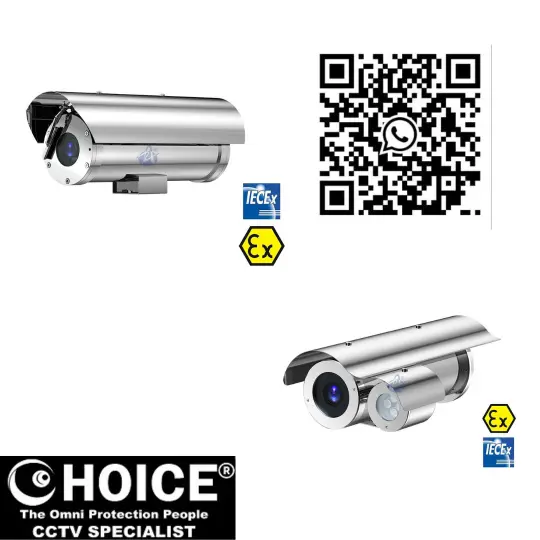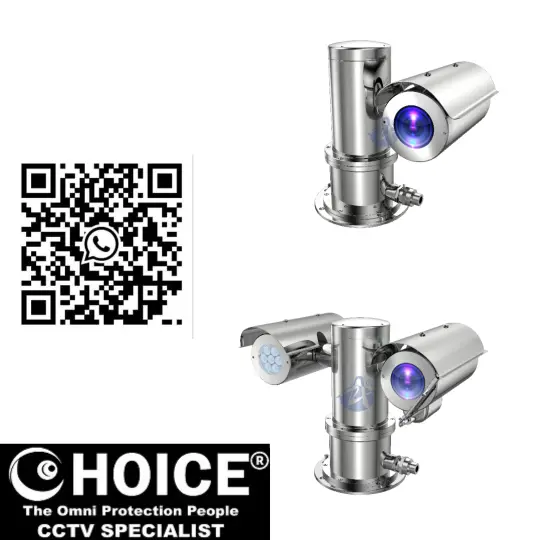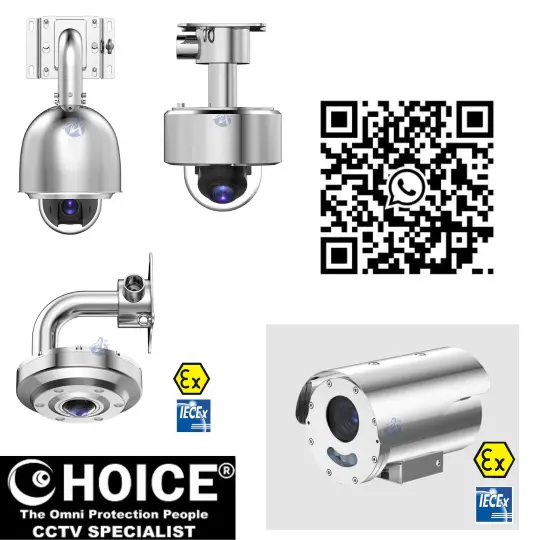
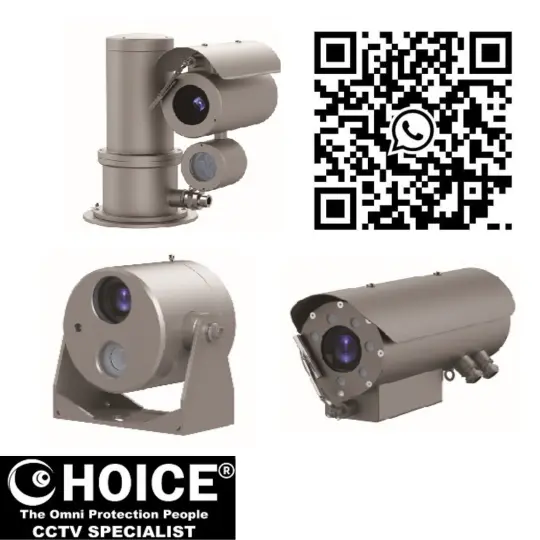
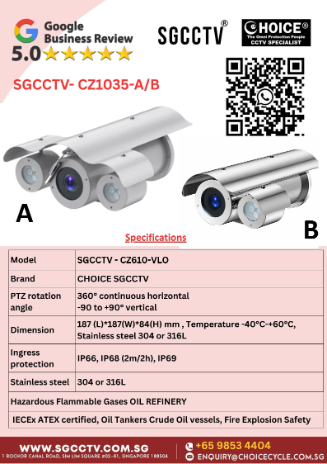
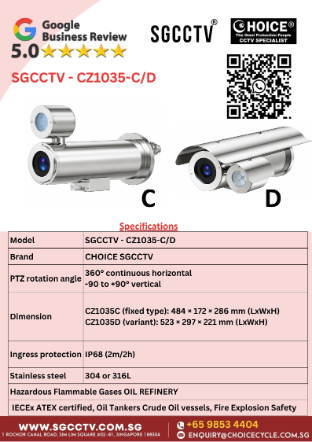
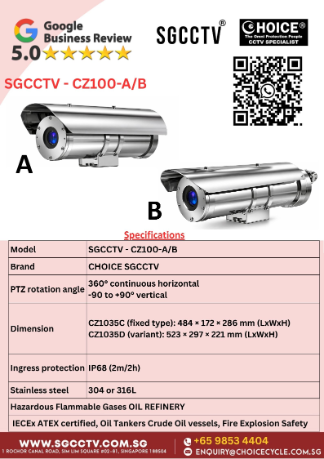
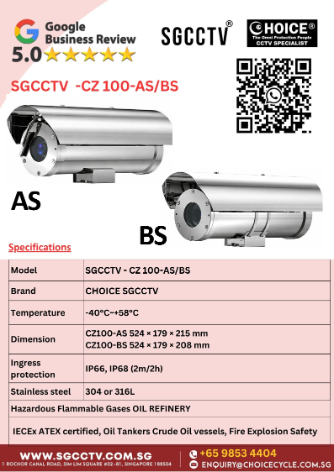
Anti-Corrosion Cameras S760, S109, S1039 & S1040 for Harsh Industrial and Marine Environments
Corrosion is one of the most persistent and costly threats to surveillance systems deployed in industrial, marine, and coastal environments. Standard CCTV cameras often fail prematurely when exposed to salt spray, chemical vapours, humidity, acid gases, and extreme weather. This is why anti-corrosion cameras are essential for industries that demand long-term reliability, safety, and uninterrupted monitoring.
This comprehensive guide focuses on anti-corrosion camera models S760, S109, S1039, and S1040, explaining their design philosophy, materials, performance advantages, applications, installation considerations, maintenance practices, and long-term value. Written as a high-depth SEO article, it is suitable for system integrators, consultants, facility owners, and procurement teams looking for professional anti-corrosion surveillance solutions.
What Is an Anti-Corrosion Camera?
An anti-corrosion camera is a surveillance camera specifically engineered to resist chemical, electrochemical, and environmental degradation. Unlike conventional cameras that rely on painted steel or aluminium housings, anti-corrosion cameras are built using marine-grade materials, protective coatings, sealed enclosures, and corrosion-resistant fasteners.
These cameras are designed to operate reliably in environments such as:
Offshore oil and gas platforms
Coastal and marine facilities
Chemical and petrochemical plants
Wastewater treatment plants
Food processing and fertilizer factories
Power stations and industrial warehouses
Why Corrosion Resistance Is Critical for Industrial CCTV
1. Operational Reliability
Corrosion can cause:
Housing degradation
Seal failure leading to water ingress
Cable and connector damage
Lens contamination and image distortion
Anti-corrosion cameras prevent these failures and maintain stable performance over many years.
2. Safety and Compliance
In regulated industries, failed surveillance can lead to:
Safety violations
Regulatory penalties
Increased accident risk
Anti-corrosion cameras help maintain continuous monitoring and compliance with safety standards.
3. Lower Total Cost of Ownership (TCO)
Although anti-corrosion cameras have a higher upfront cost, they:
Last significantly longer
Reduce replacement frequency
Minimise maintenance and downtime
This results in lower lifetime costs compared to standard cameras.
Overview of Anti-Corrosion Camera Models
The S760, S109, S1039, and S1040 anti-corrosion cameras form a comprehensive product range designed to cover fixed, PTZ, and specialised industrial monitoring requirements.
| Model | Camera Type | Key Strength |
|---|---|---|
| S760 | Fixed Anti-Corrosion Camera | Compact, high durability |
| S109 | Anti-Corrosion Camera | Balanced performance for industrial use |
| S1039 | Heavy-Duty Anti-Corrosion Camera | Long-range, harsh environment |
| S1040 | Advanced Anti-Corrosion Camera | High performance, mission-critical |
Anti-Corrosion Camera S760
The S760 anti-corrosion camera is designed for continuous surveillance in corrosive environments where space efficiency and durability are required.
Key Characteristics
Housing Material: Marine-grade stainless steel or corrosion-resistant alloy
Surface Protection: Anti-salt spray and chemical-resistant coating
Ingress Protection: High IP rating for dust and water resistance
Design Focus: Compact form factor with strong environmental protection
Advantages of S760
Ideal for coastal facilities and marine vessels
Resistant to salt mist, humidity, and mild chemical exposure
Long service life with minimal maintenance
Suitable for indoor and outdoor industrial use
Typical Applications
Port facilities and docks
Coastal warehouses
Seawater desalination plants
Industrial rooftops near the sea
Anti-Corrosion Camera S109
The S109 anti-corrosion camera is engineered as a versatile industrial surveillance solution, balancing durability, image performance, and ease of integration.
Key Characteristics
Material: Corrosion-resistant stainless steel housing
Sealing: Industrial-grade gaskets to prevent moisture ingress
Mounting Flexibility: Wall, ceiling, or pole mounting
Environmental Resistance: Salt, acid vapours, and industrial pollutants
Advantages of S109
Excellent for chemical plants and processing facilities
Reliable performance in high-humidity environments
Easy integration with existing CCTV infrastructure
Suitable for long-term outdoor exposure
Typical Applications
Chemical processing areas
Fertilizer and cement plants
Industrial warehouses
Wastewater treatment facilities
Anti-Corrosion Camera S1039
The S1039 anti-corrosion camera is a heavy-duty industrial model designed for extreme environments where standard cameras fail quickly.
Key Characteristics
Heavy-Duty Housing: Thick stainless steel construction
Enhanced Sealing: Protection against corrosive gases and liquids
Long-Range Monitoring: Suitable for large open industrial sites
Thermal Stability: Operates under wide temperature ranges
Advantages of S1039
Designed for continuous 24/7 operation
Superior resistance to aggressive chemicals
Suitable for offshore and oil & gas environments
Reduced maintenance cycles
Typical Applications
Offshore oil and gas platforms
Refineries and petrochemical plants
Power generation facilities
Mining and heavy industry
Anti-Corrosion Camera S1040
The S1040 anti-corrosion camera represents a high-performance solution for mission-critical surveillance in the harshest environments.
Key Characteristics
Premium Corrosion Resistance: Advanced stainless steel and coatings
High-Performance Imaging: Designed for demanding monitoring tasks
Industrial-Grade Sealing: Protection against dust, water, chemicals, and salt
Long-Life Design: Engineered for years of operation without degradation
Advantages of S1040
Ideal for critical infrastructure and high-risk zones
Maintains image clarity despite harsh exposure
Excellent long-term stability and durability
Suitable for integration with advanced monitoring systems
Typical Applications
Offshore platforms and FPSOs
Hazardous industrial zones
Coastal power stations
High-value asset monitoring
Materials and Anti-Corrosion Engineering
All four camera models rely on advanced material engineering to resist corrosion:
Stainless Steel Construction
Marine-grade stainless steel (such as 316 series)
High resistance to chloride and salt environments
Superior mechanical strength
Protective Coatings
Anti-salt spray coatings
Chemical-resistant surface treatments
UV-resistant finishes
Sealing and Gaskets
Industrial silicone or fluoropolymer seals
Prevent moisture and chemical ingress
Maintain IP protection over time
Installation Best Practices for Anti-Corrosion Cameras
Use stainless steel mounting brackets and fasteners
Avoid mixing metals to prevent galvanic corrosion
Ensure proper drainage and cable routing
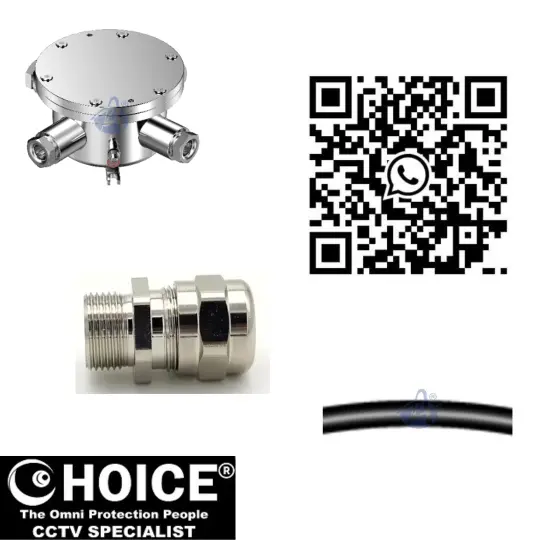
Use corrosion-resistant cable glands and conduits
Position cameras to minimise direct chemical splash exposure
Maintenance and Long-Term Care
Anti-corrosion cameras require less maintenance, but periodic checks are recommended:
Visual inspection for surface damage
Cleaning salt deposits with fresh water
Checking seals and cable entry points
Verifying mounting integrity
Comparing Anti-Corrosion Cameras to Standard Cameras
| Feature | Standard CCTV | Anti-Corrosion Cameras |
|---|---|---|
| Housing Material | Painted metal | Stainless steel |
| Salt Resistance | Low | High |
| Chemical Resistance | Minimal | Excellent |
| Lifespan | 1–3 years | 7–10+ years |
| Maintenance Cost | High | Low |
ROI and Business Value
Investing in S760, S109, S1039, and S1040 anti-corrosion cameras delivers:
Reduced equipment replacement
Lower maintenance labour costs
Higher system uptime
Improved safety compliance
Long-term cost savings
Common Use Cases Across Industries
Oil and gas upstream and downstream
Marine and offshore infrastructure
Chemical and pharmaceutical plants
Power generation facilities
Coastal logistics hubs
SEO Keywords (For Reference)
Anti corrosion camera, stainless steel CCTV camera, marine grade surveillance camera, industrial anti corrosion CCTV, offshore surveillance camera, chemical plant CCTV camera, corrosion resistant camera housing.
Conclusion
The S760, S109, S1039, and S1040 anti-corrosion cameras provide a complete and scalable surveillance solution for industries operating in corrosive environments. With robust stainless steel construction, advanced sealing, and long-term durability, these cameras ensure reliable monitoring, reduced downtime, and superior return on investment.
Choosing anti-corrosion cameras is not just a technical decision—it is a strategic investment in safety, reliability, and operational continuity.
The Real Cost of Corrosion in CCTV Systems
Corrosion impacts far more than the external appearance of a camera. In industrial CCTV deployments, corrosion commonly leads to:
Housing pitting and perforation
Seal degradation causing water ingress
Condensation inside the lens chamber
Cable jacket cracking and conductor oxidation
Connector resistance increase and signal loss
Mounting failure and mechanical instability
These issues result in blurred images, intermittent signal loss, system downtime, safety blind spots, and premature equipment replacement. In regulated industries, a failed camera may also mean non-compliance with safety audits or insurance requirements.
Anti-corrosion cameras address these risks by focusing on materials science, enclosure sealing, and long-term environmental resilience.
Anti-Corrosion Camera Engineering Principles
The S760, S109, S1039, and S1040 models share core anti-corrosion engineering principles, while addressing different operational needs.
1. Material Selection
Anti-corrosion cameras typically use:
Marine-grade stainless steel (often equivalent to 316 series)
High resistance to chlorides, salt mist, and industrial chemicals
Excellent mechanical strength under vibration and wind load
This material choice is critical for offshore platforms, ports, refineries, and coastal facilities.
2. Surface Treatment and Coatings
In addition to stainless steel construction, anti-corrosion cameras use:
Chemical-resistant surface finishes
Anti-salt spray treatments
UV-resistant coatings to prevent degradation under sunlight
These layers extend service life and reduce surface contamination buildup.
3. Industrial Sealing Design
Anti-corrosion cameras rely on:
Multi-layer gasket systems
Precision-machined joints
High IP ratings to block dust, water, and vapour ingress
This sealing strategy protects not only electronics but also optics and connectors.
Detailed Model Positioning and Use Cases
Anti-Corrosion Camera S760 – Compact and Versatile Protection
The S760 is positioned as a compact anti-corrosion camera suitable for environments where space constraints exist but durability remains essential.
Key Strengths
Smaller footprint for confined areas
High resistance to salt spray and humidity
Lower overall system weight
Ideal Environments
Coastal warehouses
Marine vessels
Seawater intake facilities
Port infrastructure
The S760 is often selected where multiple cameras are required across large areas, providing consistent corrosion resistance without oversized housings.
Anti-Corrosion Camera S109 – Balanced Industrial Workhorse
The S109 offers a balance between physical robustness and installation flexibility, making it one of the most adaptable anti-corrosion cameras in industrial deployments.
Key Strengths
Flexible mounting options
Strong resistance to chemical vapours
Suitable for indoor and outdoor industrial zones
Ideal Environments
Chemical processing plants
Fertiliser production facilities
Wastewater treatment plants
Industrial storage yards
The S109 is commonly used as a standardised anti-corrosion camera across entire facilities, simplifying maintenance and spare parts management.
Anti-Corrosion Camera S1039 – Heavy-Duty Industrial Surveillance
The S1039 is designed for severe industrial environments where exposure to corrosive substances is continuous and aggressive.
Key Strengths
Thick stainless steel housing
Enhanced sealing against corrosive gases
Long-range monitoring capability
Ideal Environments
Oil refineries
Petrochemical plants
Power generation facilities
Mining operations
The S1039 is often deployed in critical monitoring zones where camera failure is not acceptable and access for maintenance is limited.
Anti-Corrosion Camera S1040 – Mission-Critical Performance
The S1040 represents the highest tier of anti-corrosion surveillance in this range, designed for mission-critical infrastructure.
Key Strengths
Advanced corrosion-resistant materials
Superior long-term stability
Designed for high-risk, high-value assets
Ideal Environments
Offshore oil and gas platforms
FPSOs and marine terminals
Coastal power stations
Strategic industrial assets
The S1040 is typically selected when system uptime, reliability, and longevity outweigh initial cost considerations.
Environmental Resistance Capabilities
Salt and Marine Atmospheres
Salt accelerates corrosion by breaking down passive metal layers. Anti-corrosion cameras use materials and finishes that resist chloride penetration, making them suitable for:
Open sea exposure
Coastal wind-driven salt mist
Marine splash zones
Chemical Vapours and Industrial Gases
In chemical plants, airborne substances such as ammonia, sulphur compounds, and acidic vapours attack standard camera housings. Anti-corrosion cameras are designed to resist:
Acidic and alkaline vapours
Industrial solvents
Fertiliser dust and emissions
Temperature and Humidity Cycling
Frequent temperature changes cause expansion and contraction, which can compromise seals. Anti-corrosion cameras are engineered to maintain sealing integrity across wide temperature ranges and constant humidity.
Installation Engineering Considerations
Correct installation is essential to fully realise the benefits of anti-corrosion cameras.
Mounting Hardware
Always use stainless steel brackets, bolts, and fasteners
Avoid mixing metals to prevent galvanic corrosion
Ensure mounting surfaces are structurally sound
Cable Entry and Routing
Use corrosion-resistant cable glands
Maintain proper drip loops to prevent water ingress
Protect cables with conduit in exposed environments
Positioning Strategy
Avoid direct exposure to chemical discharge points
Allow airflow to reduce condensation
Position cameras for maintenance access when possible
Maintenance Strategy for Anti-Corrosion Cameras
Although designed for long service life, anti-corrosion cameras still benefit from planned inspections.
Recommended Maintenance Practices
Periodic rinsing with fresh water in marine environments
Visual inspection for coating damage
Checking cable seals and connectors
Verifying mounting integrity after storms or heavy vibration
Compared to standard cameras, maintenance intervals are significantly longer, reducing operational costs.
Lifecycle and Total Cost of Ownership (TCO)
Standard Cameras in Corrosive Environments
Typical lifespan: 1–3 years
Frequent replacements
High labour and downtime costs
Anti-Corrosion Cameras
Typical lifespan: 7–10+ years
Minimal replacement cycles
Lower long-term operational expenditure
When evaluated over the full lifecycle, S760, S109, S1039, and S1040 cameras deliver substantial cost savings, especially in hard-to-access or high-risk locations.
Industry-Specific Applications
Oil and Gas
Perimeter security
Process monitoring
Safety compliance
Marine and Ports
Vessel monitoring
Cargo handling surveillance
Dock and terminal security
Chemical and Pharmaceutical
Process area monitoring
Leak detection support
Restricted zone surveillance
Utilities and Power
Substation monitoring
Cooling system oversight
Coastal power infrastructure
Future-Proofing Industrial Surveillance
Anti-corrosion cameras are increasingly integrated with:
Centralised monitoring platforms
AI-assisted video analytics
Predictive maintenance systems
Industrial IoT infrastructure
Their durability makes them ideal for long-term digital transformation projects where hardware stability is critical.
SEO Keyword Expansion
Anti corrosion camera, marine grade CCTV camera, stainless steel surveillance camera, offshore CCTV camera, chemical plant anti corrosion camera, corrosion resistant industrial camera, coastal CCTV solution, long life industrial camera.
Final Summary
The S760, S109, S1039, and S1040 anti-corrosion cameras form a complete surveillance solution for environments where corrosion is a constant threat. Through advanced materials, industrial sealing, and robust mechanical design, these cameras provide:
Long-term reliability
Reduced maintenance and downtime
Improved safety and compliance
Lower total cost of ownership
For industrial operators, choosing anti-corrosion cameras is not optional—it is a strategic investment in system reliability and operational continuity.
Corrosion Categories and How They Affect CCTV Cameras
Understanding corrosion types helps explain why standard cameras fail and why anti-corrosion models are necessary.
Uniform Corrosion
Occurs when metal surfaces are evenly exposed to moisture and oxygen. Painted steel housings slowly thin, eventually cracking and leaking.
Impact on cameras:
Housing weakness
Loss of waterproof integrity
Increased vibration sensitivity
Pitting Corrosion
Common in stainless steel exposed to chlorides (salt air). Small pits penetrate deep into the metal.
Impact on cameras:
Sudden housing failure
Hidden internal damage
Difficult early detection
Crevice Corrosion
Forms in gasket joints, bolt interfaces, and mounting points where moisture becomes trapped.
Impact on cameras:
Seal failure
Internal condensation
Electrical short circuits
Galvanic Corrosion
Occurs when different metals contact each other in the presence of moisture.
Impact on cameras:
Fastener failure
Mounting instability
Accelerated structural degradation
Anti-corrosion cameras are designed to minimise or eliminate all four corrosion modes through material selection, sealing, and system integration.
Anti-Corrosion Camera System Design Philosophy
The S760, S109, S1039, and S1040 are not just cameras with better housings. They are designed as complete environmental systems.
Housing as a Protective Barrier
Thick stainless steel resists impact, vibration, and chemical attack
Smooth surfaces reduce salt and chemical buildup
Precision machining reduces micro-gaps
Internal Component Isolation
Electronics isolated from external metal surfaces
Moisture barriers protect sensors and connectors
Condensation control through sealed chambers
Mechanical Stability
Designed for high wind load environments
Maintains alignment despite thermal expansion
Compatible with heavy-duty stainless steel brackets
Expanded Use-Case Mapping by Industry
Offshore Oil & Gas
Anti-corrosion cameras are essential due to:
Constant salt spray
Strong winds and vibration
Limited maintenance access
Common deployments
Helideck monitoring
Process skid observation
Perimeter security
S1039 and S1040 are typically selected for primary monitoring, while S760 or S109 may support secondary coverage.
Marine Ports and Shipyards
Ports experience corrosion from:
Saltwater exposure
Diesel fumes
Mechanical abrasion
Use cases
Container yard surveillance
Vessel berthing monitoring
Crane and gantry oversight
S760 and S109 are popular for wide deployment, balancing cost and durability.
Chemical & Petrochemical Facilities
Chemical environments expose cameras to:
Acidic vapours
Alkali dust
Reactive gases
Use cases
Reactor area monitoring
Pipeline inspection
Restricted zone surveillance
S109 and S1039 are commonly chosen for plant-wide standardisation.
Power Generation and Utilities
Power plants face:
High humidity
Thermal cycling
Coastal exposure (for seaside plants)
Use cases
Cooling system observation
Substation surveillance
Perimeter security
S1039 and S1040 are preferred where uptime is critical.
Integration with Mounting, Cabling, and Accessories
An anti-corrosion camera system is only as strong as its weakest component.
Mounting Hardware
Stainless steel brackets recommended
Avoid aluminium or zinc-plated steel
Ensure load ratings exceed camera weight
Cable Protection
Use corrosion-resistant glands
Seal all cable entries properly
Protect cables with conduit in splash zones
Electrical Grounding
Proper grounding reduces electrochemical corrosion
Prevents static discharge damage
Compliance, Audits, and Insurance Considerations
While anti-corrosion cameras are not always legally mandated, they often support:
Workplace safety audits
Environmental compliance inspections
Insurance risk assessments
Facilities that repeatedly replace corroded cameras may face:
Higher insurance premiums
Audit non-conformance
Increased operational scrutiny
Long-life anti-corrosion cameras demonstrate risk mitigation and responsible asset management.
Procurement Strategy: How to Select the Right Model
Choose S760 When:
Space is limited
Large camera quantities are required
Environment is moderately corrosive
Choose S109 When:
A standardised industrial camera is needed
Chemical vapours are present
Flexibility in mounting is important
Choose S1039 When:
Environment is continuously harsh
Maintenance access is limited
Long-range or critical monitoring is required
Choose S1040 When:
Asset value is extremely high
Downtime is unacceptable
Long-term infrastructure projects are involved
Long-Term Asset Planning and Lifecycle Value
Anti-corrosion cameras align well with 10- to 15-year facility planning cycles. Benefits include:
Fewer system redesigns
Stable spare parts planning
Predictable maintenance schedules
Reduced unplanned outages
This makes S760, S109, S1039, and S1040 ideal for:
Greenfield industrial projects
Major facility upgrades
Long-term infrastructure investments
Expanded SEO Keyword Coverage
Anti corrosion CCTV camera
Marine grade surveillance camera
Stainless steel industrial camera
Offshore corrosion resistant CCTV
Chemical plant CCTV camera
Coastal security camera system
Long life industrial camera
Final Extended Conclusion
The S760, S109, S1039, and S1040 anti-corrosion cameras are purpose-built for environments where corrosion is unavoidable and system failure is costly. Their design addresses corrosion at every level—material, sealing, mechanical structure, and lifecycle planning.
By deploying anti-corrosion cameras, industrial operators gain:
Long-term surveillance reliability
Reduced maintenance burden
Improved safety compliance
Lower total cost of ownership
These cameras are not upgrades—they are the correct tool for corrosive environments.

Choicecycle (SGCCTV Singapore) – Contact & Store Information
For professional advice, supply, and support of anti-corrosion cameras and industrial CCTV solutions in Singapore, contact Choicecycle (SGCCTV Singapore):
WhatsApp: +65 9853 4404
Email: enquiry@choicecycle.com.sg
Website: https://sgcctv.com.sg
Store Location: SGCCTV Choicecycle, Sim Lim Square #02-81, Singapore
Operating Hours: 11 AM – 8 PM


Nunc lacus elit, faucibus ac laoreet sed, dapibus ac mi. Maecenas eu ante a elit tempus fermentum. Aliquam commodo tincidunt semper. Phasellus accumsan, justo ac mollis pharetra, ex dui pharetra nisl, a scelerisque ipsum nulla ac sem. Cras eu risus urna. Duis lorem sapien, congue eget nisl sit amet, rutrum faucibus elit.
Donec accumsan auctor iaculis. Sed suscipit arcu ligula, at egestas magna molestie a. Proin ac ex maximus, ultrices justo eget, sodales orci. Aliquam egestas libero ac turpis pharetra, in vehicula lacus scelerisque. Vestibulum ut sem laoreet, feugiat tellus at, hendrerit arcu.
Nunc lacus elit, faucibus ac laoreet sed, dapibus ac mi. Maecenas eu ante a elit tempus fermentum. Aliquam commodo tincidunt semper. Phasellus accumsan, justo ac mollis pharetra, ex dui pharetra nisl, a scelerisque ipsum nulla ac sem. Cras eu risus urna. Duis lorem sapien, congue eget nisl sit amet, rutrum faucibus elit.