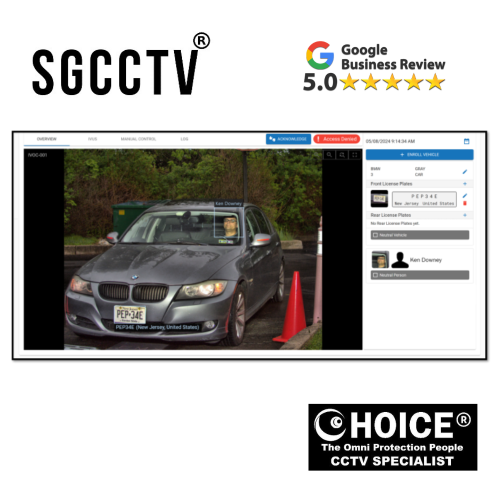
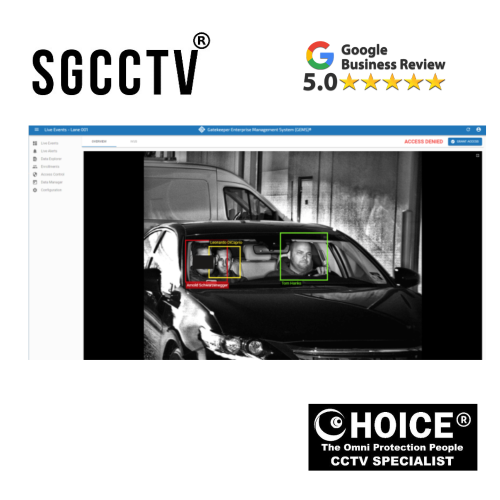

Rapiscan Gatekeeper Intelligent Vehicle and Occupant Camera (IVOC) face capturing and decoding the vehicle license plate
Rapiscan Gatekeeper Intelligent Vehicle and Occupant Camera (IVOC) System
Advanced Dual-Function Security: Facial Capture + License Plate Decoding
The Rapiscan Gatekeeper Intelligent Vehicle and Occupant Camera (IVOC) is a powerful multi-function security solution designed to enhance vehicle access control through simultaneous occupant identification and license plate recognition. It combines high-resolution imaging, intelligent analytics, and real-time data processing to deliver a complete and automated checkpoint verification system.
Unlike traditional systems that focus on either the vehicle or the driver, the IVOC system integrates both capabilities into a single platform—capturing the driver’s face for identity verification while also decoding and recording the vehicle license plate number with high accuracy and speed. This dual-layer approach strengthens security and improves decision-making at high-risk access points.
Dual-Function Intelligence for Maximum Security
The IVOC system is engineered as a multi-factor identification platform. It performs two critical functions at the same time:
1. Face Capture & Occupant Identification
The system captures high-resolution images of the driver and occupants inside the vehicle. Using advanced imaging and recognition technology, it can:
- Detect faces through windshields
- Identify individuals in real time
- Support watchlist-based security screening
- Work in day, night, and challenging lighting conditions
2. License Plate Capture & Decoding
At the same time, the system captures the vehicle’s license plate and converts it into readable data using intelligent OCR (Optical Character Recognition). It can:
- Read reflective and non-reflective plates
- Decode alphanumeric plate data instantly
- Record vehicle identity for database matching
- Support front and rear plate recognition
According to system specifications, IVOC provides a single-platform solution that captures driver face data, license plate information, and vehicle classification data in real time for enhanced security analytics.
Rapiscan Gatekeeper Intelligent Vehicle and Occupant Camera (IVOC) face capturing and decoding the vehicle license plate
High-Speed, Real-Time Processing
One of the key strengths of the IVOC system is its ability to operate at high speed without interrupting traffic flow. Vehicles can pass through checkpoints while the system performs simultaneous analysis in real time.
This ensures:
- Faster entry processing
- Reduced checkpoint congestion
- Continuous monitoring without stopping vehicles
The system is optimized for environments where high throughput and strong security must work together.
Intelligent Vehicle Data Enhancement
Beyond facial recognition and license plate decoding, the IVOC system also enriches vehicle data by capturing:
- Vehicle make
- Model
- Color
This additional layer of intelligence allows security teams to validate whether a vehicle matches its registered identity profile, strengthening anti-fraud and anti-intrusion measures.
Multi-Layer Security Integration
The IVOC system is designed to work as part of a larger security ecosystem. It integrates with other Gatekeeper technologies such as:
- Occupant detection systems (IVOD)
- Under-vehicle scanners (IVUS)
- License plate analytics (ILPA)
- Central management software platforms
This creates a multi-factor security environment, where vehicle identity, occupant identity, and vehicle history are all cross-checked in real time.
Designed for High-Security Environments
The IVOC system is ideal for deployment in:
- Airports and border control points
- Military and defense facilities
- Government buildings
- Critical infrastructure sites
- Corporate high-security campuses
These environments require fast yet highly reliable verification systems, making IVOC a strong fit for modern access control needs.
Reliable Performance in All Conditions
The system is engineered to perform under challenging conditions, including:
- Low light or nighttime operation
- Strong sunlight and glare
- Tinted or reflective windshields
- High vehicle traffic environments
This ensures consistent performance regardless of external conditions.
Conclusion
The Rapiscan Gatekeeper IVOC system is a next-generation security solution that combines face recognition, license plate decoding, and vehicle intelligence into one unified platform. By enabling real-time, dual-layer verification, it significantly enhances access control efficiency while maintaining strong security standards.
It represents a major step forward in intelligent vehicle screening—delivering speed, accuracy, and comprehensive identity verification in a single system.
Rapiscan Gatekeeper Intelligent Vehicle and Occupant Camera (IVOC) face capturing and decoding the vehicle license plate
🚗 How to Install Rapiscan Gatekeeper IVOC System
Step-by-Step Deployment Guide (Face Capture + LPR Camera System)
The IVOC system is a high-precision security camera solution, so installation must be done carefully to ensure accurate face capture and license plate recognition (LPR).
🧰 1. Site Survey & System Planning (CRITICAL)
Before installation, engineers must inspect the site.
Check:
- Vehicle lane width (single / dual lane)
- Vehicle speed at checkpoint
- Lighting conditions (day/night)
- Position of barrier gate
- Existing CCTV / LPR systems
- Camera mounting structure availability
Decide:
- Camera height and angle
- Capture zone (stop line or drive-through point)
- Network and power routing
👉 This step determines accuracy of face + plate capture.
📍 2. Define Capture Zone (VERY IMPORTANT)
The IVOC system must be installed at the correct vehicle capture point.
Ideal Position:
- Just before barrier gate OR controlled stop line
- Straight vehicle alignment (no curves)
- Stable speed zone (0–15 km/h ideal)
Avoid:
- Sharp turns
- Fast-moving lanes
- Obstructed view areas
👉 Wrong placement = failed face capture or blurred plates.
Rapiscan Gatekeeper Intelligent Vehicle and Occupant Camera (IVOC) face capturing and decoding the vehicle license plate
🏗️ 3. Mount IVOC Camera System
Hardware includes:
- High-resolution face capture camera
- License plate recognition camera (LPR)
- Infrared or low-light illumination unit
Installation Steps:
Step 1: Install Mounting Pole / Gantry
- Ensure strong vibration-free structure
- Use steel pole or overhead beam
Step 2: Camera Positioning
- Face camera angled toward driver window
- LPR camera focused on number plate zone
- Ensure both views overlap vehicle path
Step 3: Secure Fixing
- Tighten brackets firmly
- Prevent movement from wind or vibration
👉 Stability is key for image accuracy.
⚡ 4. Power Supply Setup
Requirements:
- Stable AC power source
- UPS backup recommended (very important)
Steps:
- Connect cameras to dedicated power line
- Install surge protection
- Ensure grounding is properly done
👉 Prevents downtime and system reboot failures.
🌐 5. Network & System Connection
The IVOC system must be connected to a secure network.
Connect to:
- Security control room server
- Access control system
- Database (vehicle + personnel records)
Setup:
- Assign static IP addresses
- Configure VLAN for security traffic
- Enable encryption if required
👉 Ensures real-time data transmission.
🧠 6. Software Installation & Configuration
Install:
- IVOC management software platform
- LPR decoding engine
- Face recognition module
Configure:
- Face detection zones
- Plate recognition rules
- Vehicle classification settings
Example rules:
- Capture driver face → mandatory
- Read plate → mandatory
- Save record → database logging
📸 7. Camera Calibration (MOST CRITICAL STEP)
Calibration ensures accuracy for both face + plate.
Steps:
Step 1: Test Vehicle Run
- Drive vehicle through checkpoint
Step 2: Adjust Angles
- Fine-tune face camera toward driver window
- Align LPR camera to plate height
Step 3: Lighting Adjustment
- Adjust IR lighting for night use
- Reduce glare from headlights
Step 4: Focus & Sharpness
- Ensure license plate text is readable
- Ensure face image is clear
👉 Without calibration, system accuracy drops significantly.
Rapiscan Gatekeeper Intelligent Vehicle and Occupant Camera (IVOC) face capturing and decoding the vehicle license plate
🚗 8. System Testing (LIVE SIMULATION)
Test different scenarios:
Test Cases:
- Sedan vehicle (single driver)
- SUV (higher seating position)
- Tinted window vehicle
- Night-time operation
- Fast vs slow movement
Check:
- Face clarity
- Plate readability
- Matching speed of capture
- System response time
🚨 9. Integration Testing
IVOC is often part of a larger system.
Integrate with:
- Access control gate barrier
- IVOD occupant detection system
- CCTV recording system
- Security command center
Test:
- Auto gate trigger
- Alert generation
- Data logging accuracy
🔧 10. Live Deployment & Monitoring
After testing:
- Switch system to live mode
- Train security operators
- Monitor first 48–72 hours closely
Operator Training:
- How to check face capture images
- How to verify license plate records
- How to respond to alerts
Rapiscan Gatekeeper Intelligent Vehicle and Occupant Camera (IVOC) face capturing and decoding the vehicle license plate
⚠️ Common Installation Mistakes
❌ Wrong camera height
❌ Poor lighting setup
❌ No calibration after installation
❌ Incorrect angle for windshield reflection
❌ Weak network connection
👉 These are the main causes of system failure in real sites.
🧠 Pro Installer Tips
✔ Install at fixed vehicle stop point
✔ Use dual-angle camera setup (face + plate)
✔ Always test with tinted and non-tinted vehicles
✔ Use stable steel mounting structure
✔ Always calibrate at day AND night
🏁 Conclusion
Installing the Rapiscan Gatekeeper IVOC system requires precise planning, correct camera positioning, proper calibration, and full system integration. When installed correctly, it provides high-speed, accurate face capture and license plate recognition, making it ideal for high-security vehicle access control environments.\
⏳ How Long Does the Rapiscan Gatekeeper IVOC System Last?
Expected Lifespan & Real-World Performance
The Rapiscan Systems Gatekeeper IVOC system is designed as a critical infrastructure security solution, not a consumer camera. Because of this, it is built for long-term, continuous operation in demanding environments.
🧠 1. Overall System Lifespan
Typical lifespan:
- 10 to 15 years (system-level use)
- With proper maintenance: can exceed 15+ years
👉 This includes:
- Cameras
- Processing units
- Mounting structures (with proper anti-corrosion care)
📸 2. Camera & Optical Modules
Lifespan:
- 5 to 8 years (high-performance imaging modules)
What affects it:
- Sun exposure (outdoor gantries)
- Dust / humidity
- Night IR usage cycles
- Vibration from traffic structures
Maintenance impact:
✔ Regular lens cleaning = longer lifespan
✔ Proper housing = protects sensors
🧠 3. AI Processing Unit / Control System
Lifespan:
- 7 to 12 years
This includes:
- Face recognition engine
- License plate decoding system
- Edge computing hardware
What helps it last longer:
- Stable power supply (UPS recommended)
- Proper ventilation
- Software updates
Rapiscan Gatekeeper Intelligent Vehicle and Occupant Camera (IVOC) face capturing and decoding the vehicle license plate
⚡ 4. Power & Electrical Components
Lifespan:
- 5 to 10 years
Includes:
- Power supplies
- Surge protectors
- Network switches (if dedicated)
Common failure causes:
- Power surges
- Lightning events
- Poor grounding
🏗️ 5. Mechanical Structure (Poles / Gantry)
Lifespan:
- 15 to 25 years
Depends on:
- Steel quality
- Anti-rust coating
- Environmental exposure
👉 In Singapore, corrosion resistance is very important due to humidity.
🌐 6. Software / System Platform
Lifespan:
- 10+ years (with updates)
Modern IVOC systems are:
- Upgradable
- Firmware-updatable
- Integration-ready
👉 Software usually outlives hardware if maintained properly.
⚠️ 7. What Reduces System Lifespan?
In real installations, lifespan is shortened by:
❌ No routine cleaning
❌ Poor installation angle (causes vibration stress)
❌ Power instability (no UPS)
❌ Water/dust exposure
❌ No calibration after maintenance
❌ Outdated software not updated
🧠 8. Real-World Field Expectation
In actual security deployments:
- Airports / government sites → 10–15 years stable use
- Industrial sites → 8–12 years typical
- Poorly maintained sites → 3–5 years (performance drop)
👉 The difference is maintenance quality, not brand quality
Rapiscan Gatekeeper Intelligent Vehicle and Occupant Camera (IVOC) face capturing and decoding the vehicle license plate
🔧 9. How to Make It Last Longer (BEST PRACTICE)
✔ Install in stable gantry structure
✔ Use UPS + surge protection
✔ Clean lenses monthly
✔ Recalibrate every 6–12 months
✔ Keep firmware updated
✔ Avoid water ingress (proper housing)
🏁 Final Answer (Simple Summary)
👉 The IVOC system typically lasts:
- 10–15 years overall
- Cameras: 5–8 years
- Structure: 15–25 years
- Software: 10+ years
With good maintenance, it becomes a long-term infrastructure security asset, not just a camera system.
🚗 What the IVOC System Can Do
Intelligent Vehicle + Occupant Identification in Real Time
The IVOC system is designed to turn a normal vehicle checkpoint into a smart, automated identity verification point. It doesn’t just “see a car”—it understands who is inside and which vehicle it is, all at once.
👁️ 1. Capture Driver Face Inside Vehicles
One of its core functions is face capture through windshields.
It can:
- Detect driver face inside moving or stationary vehicles
- Capture high-resolution facial images
- Work through glass, including tinted windshields (within limits)
- Store face data for security records
👉 This allows security teams to verify who is driving the vehicle.
🚗 2. Read & Decode License Plates (LPR Function)
The system automatically captures vehicle plates.
It can:
- Read front or rear license plates
- Decode numbers using OCR (Optical Character Recognition)
- Handle different plate styles and lighting conditions
- Store plate data in databases
👉 This ensures every vehicle is digitally recorded and traceable.
🧠 3. Match Vehicle + Driver Identity
This is where IVOC becomes powerful.
It can:
- Link face data + license plate data together
- Compare against registered database entries
- Flag mismatches instantly
Example:
- Registered driver = A
- Face detected = B
👉 System triggers alert
Rapiscan Gatekeeper Intelligent Vehicle and Occupant Camera (IVOC) face capturing and decoding the vehicle license plate
🚨 4. Detect Unauthorized or Suspicious Entry
The system helps identify security risks.
It can detect:
- Unknown drivers
- Unregistered vehicles
- Suspicious identity mismatch
- Watchlisted individuals (if integrated)
👉 Used in high-security checkpoints
🚗 5. Work in Real-Time Without Stopping Traffic
IVOC is designed for fast-moving environments.
It can:
- Scan vehicles while they move slowly
- Process data in real time
- Avoid manual stopping (in most setups)
👉 This reduces congestion at gates.
🌙 6. Operate Day & Night
The system works in different lighting conditions.
It can:
- Function in low light / night mode
- Use infrared or enhanced imaging
- Reduce glare from headlights
📊 7. Store and Log All Vehicle Events
Every scan is recorded.
It logs:
- Vehicle plate number
- Driver face image
- Time & date
- Entry/exit status
👉 Useful for audits and investigations.
🔗 8. Integrate with Other Security Systems
IVOC is not standalone—it connects with full security infrastructure.
It can integrate with:
- Access control gates
- CCTV surveillance systems
- Occupant detection (IVOD)
- Security command center software
🧍♂️ 9. Capture Additional Vehicle Details
Beyond face + plate, it can also:
- Detect vehicle type (car, van, truck)
- Estimate vehicle color
- Identify movement patterns
Rapiscan Gatekeeper Intelligent Vehicle and Occupant Camera (IVOC) face capturing and decoding the vehicle license plate
⚡ 10. Improve Security Efficiency
In real deployments, IVOC helps:
✔ Reduce manual inspection
✔ Speed up entry processing
✔ Improve accuracy of identity checks
✔ Lower human error
✔ Increase checkpoint security level
🧠 Simple Explanation
Think of IVOC like this:
A smart security camera that can see the driver’s face, read the license plate, and check if both match the security system—all in seconds.
🏁 Final Summary
The IVOC system can:
✔ Capture driver faces
✔ Read license plates
✔ Match identity data
✔ Detect suspicious vehicles
✔ Store security records
✔ Work in real time
✔ Integrate with full security systems
👉 It is basically a dual identity verification system for vehicles + occupants
🛡️ Warranty for Rapiscan Gatekeeper IVOC System
What You Actually Get
For the Rapiscan Systems Gatekeeper IVOC system, the warranty is not a single fixed global number. It depends on:
- Country / region
- Project contract
- Service agreement level
👉 So the warranty is usually customized per installation project
Rapiscan Gatekeeper Intelligent Vehicle and Occupant Camera (IVOC) face capturing and decoding the vehicle license plate
📄 Typical Warranty Structure (Real Industry Standard)
In real deployments, IVOC systems usually follow this structure:
🟢 1. Standard Manufacturer Warranty
- ~12 months (1 year) common baseline
- Covers manufacturing defects only
- Includes cameras, sensors, and processing unit (if not damaged by misuse)
🟡 2. Extended Service Contract (Optional)
Many government / airport projects include:
- 2 to 5 years service agreement
- Includes:
- On-site support
- Parts replacement
- Software updates
- Preventive maintenance
🔵 3. Long-Term Support Option
For critical infrastructure sites:
- 5–10+ year maintenance lifecycle support
- Includes system upgrades and recalibration
- Hardware replacement planning
⚠️ Important Warranty Conditions (Real Field Rules)
Warranty is usually void if:
❌ Improper installation by non-certified technicians
❌ Power surge damage or lightning
❌ Physical damage or vandalism
❌ Unauthorized modifications
❌ Poor maintenance (dust, water ingress, lens damage)
👉 This is standard for high-security systems
🔧 What Is Usually Covered
✔ Manufacturing defects
✔ Sensor or camera failure (non-physical damage)
✔ Software malfunction under normal use
✔ Processing unit hardware faults
🚫 What Is NOT Covered
❌ Misalignment after installation
❌ Environmental damage (rain, corrosion, heat)
❌ Cable damage or site wiring issues
❌ Network failures
❌ Human error during setup
🧠 Simple Explanation
Think of IVOC warranty like this:
“The manufacturer guarantees the system works as built, but site conditions and installation quality decide long-term performance.”
🏁 Real-World Summary
- Standard warranty: ~1 year (typical baseline)
- Extended support: 2–5 years (common for projects)
- Long-term service contracts: up to 10+ years
- Final coverage depends on project agreement
📞 Local Support – Singapore
For warranty clarification, installation, or service planning:
Choicecycle (SGCCTV Singapore)
📍 Sim Lim Square #02-81
📞 WhatsApp: +65 9853 4404
📧 enquiry@choicecycle.com.sg
🌐 https://sgcctv.com.sg
🕒 11 AM – 8 PM
Rapiscan Gatekeeper Intelligent Vehicle and Occupant Camera (IVOC) face capturing and decoding the vehicle license plate


Nunc lacus elit, faucibus ac laoreet sed, dapibus ac mi. Maecenas eu ante a elit tempus fermentum. Aliquam commodo tincidunt semper. Phasellus accumsan, justo ac mollis pharetra, ex dui pharetra nisl, a scelerisque ipsum nulla ac sem. Cras eu risus urna. Duis lorem sapien, congue eget nisl sit amet, rutrum faucibus elit.
Donec accumsan auctor iaculis. Sed suscipit arcu ligula, at egestas magna molestie a. Proin ac ex maximus, ultrices justo eget, sodales orci. Aliquam egestas libero ac turpis pharetra, in vehicula lacus scelerisque. Vestibulum ut sem laoreet, feugiat tellus at, hendrerit arcu.
Nunc lacus elit, faucibus ac laoreet sed, dapibus ac mi. Maecenas eu ante a elit tempus fermentum. Aliquam commodo tincidunt semper. Phasellus accumsan, justo ac mollis pharetra, ex dui pharetra nisl, a scelerisque ipsum nulla ac sem. Cras eu risus urna. Duis lorem sapien, congue eget nisl sit amet, rutrum faucibus elit.